The AI Power Map of 2026: Who Really Matters Now

The hierarchy of the technology sector has shifted away from the simple pursuit of intelligence. In the early days of this decade, the primary goal was to build a model that could pass a bar exam or write a poem. By 2026, that goal has become a commodity. Intelligence is now a utility, much like electricity or water. The real power does not reside with the companies that make the loudest announcements or the most viral demos. Instead, the map of influence is drawn by those who control the physical infrastructure and the points of contact with the end user. We are seeing a massive consolidation where visibility is often confused with actual leverage. A company might have a famous brand, but if it relies on a competitor for its hardware and its distribution, its position is fragile. The true heavyweights of this era are the entities that own the data centers, the proprietary datasets, and the operating systems where work actually happens. This is a story of vertical integration and the quiet capture of the tools we use to think.
The Three Pillars of Modern Technical Leverage
To understand who really matters in this new era, we must look at three specific pillars. The first is compute power. This is the raw material of the modern age. Without massive clusters of specialized chips, no amount of clever software matters. The companies that design these chips and the cloud providers that buy them in bulk have created a moat that is almost impossible to cross. They dictate the speed of progress and the price of entry for everyone else. If you cannot afford the rent on a cluster of ten thousand processors, you are not a player in the foundational layer of this industry. This has created a two-tiered system where a handful of giants provide the oxygen for thousands of smaller firms. It is a relationship of total dependency that is often masked by friendly partnerships and joint ventures.
The second pillar is distribution. Having a great tool is useless if you cannot put it in front of a billion people. This is why the owners of the operating systems and the dominant productivity suites hold so much sway. They do not need to have the best model. They only need to have a “good enough” model that is already installed on every laptop and phone in the world. When a user can access a feature with a single click in their email or spreadsheet, they are unlikely to seek out a third party app. This distribution advantage allows the incumbents to absorb new innovations and neutralize competitors before they can gain a foothold. It is a form of soft power that relies on the friction of switching to a different ecosystem.
The third pillar is the user relationship. This is the most misunderstood part of the map. The company that owns the interface owns the data and the loyalty. Even if the underlying intelligence is provided by an external partner, the user associates the value with the brand they interact with daily. This creates a tension between the model builders and the interface owners. The model builders want to be the destination, while the interface owners want to treat the models as interchangeable parts. As we move further into 2026, the winners are those who can successfully bridge these three pillars. They are the ones who own the chips, the cloud, and the glass through which the user views the world. This is the ultimate form of vertical integration.
The Global Divide and the Sovereignty Crisis
This concentration of power has profound implications for the global stage. We are no longer looking at a flat world where any startup in any country can compete on equal footing. The capital requirements for staying relevant have become so high that only a few nations and a few corporations can stay in the race. This has led to the rise of sovereign AI initiatives. Governments are realizing that relying on foreign entities for their primary cognitive infrastructure is a massive strategic risk. If a nation does not have its own compute clusters and its own localized models, it is effectively a digital colony. This realization is driving a new kind of protectionism where data residency and local hardware ownership are becoming national priorities. The gap between the “compute rich” and the “compute poor” is widening every day.
This divide is not just about economics. It is about culture and values. When a small group of companies in a single region trains the models that the rest of the world uses, those models carry the biases and perspectives of their creators. This has led to a push for localized versions of technology that reflect specific languages and social norms. However, building these local alternatives is incredibly difficult when the underlying hardware is controlled by the same few giants. The divergence between public perception and reality is clear here. People talk about the democratization of technology, but the underlying reality is one of extreme centralization. The tools might be available to everyone, but the control over those tools is held by a very small number of hands. This creates a fragile global system where a single policy change or a supply chain disruption in one corner of the world can have immediate effects on the productivity of millions of people elsewhere. This is the hidden cost of a unified global stack.
The Reality of the Automated Workspace
Consider a typical day for a marketing director named Sarah. Her role has changed significantly over the last few years. She no longer spends her time writing copy or analyzing spreadsheets manually. Instead, she acts as a conductor for a suite of automated agents. When she starts her day, her primary dashboard has already summarized the overnight performance of her campaigns across four continents. It has identified a dip in engagement in the European market and has already drafted three alternative strategies to address it. Sarah does not need to “work” in the traditional sense. She needs to provide the final approval and the strategic direction. This sounds efficient, but it reveals the deep integration of the power players. Sarah is using a platform that combines a cloud provider, a model builder, and a data broker. She is not just using a tool. She is living inside an ecosystem.
The friction appears when Sarah tries to move her data. If she finds a better tool for a specific task, she realizes that the cost of moving her entire workflow is prohibitive. The data is “sticky,” and the integrations are proprietary. This is the “lock in” that the power map is built upon. The companies that matter are the ones that make themselves indispensable to Sarah’s daily routine. They are the ones that provide the identity layer, the storage layer, and the execution layer. In this scenario, the actual quality of the intelligence is secondary to the convenience of the integration. Sarah might know that a rival model is five percent more accurate, but she will not switch because it would break teh connections between her different apps. This is the practical reality of the power map. It is built on the path of least resistance for the user.
This integration extends to the creative sectors as well. A filmmaker might use an automated suite to generate storyboards and color grades. A software engineer uses an assistant to write the boilerplate code and debug the logic. In both cases, the individual is becoming a high level manager of automated processes. The companies that own these processes are effectively taking a tax on every creative and technical act. This is not a temporary trend. It is a fundamental shift in how value is created. The leverage has moved from the person with the skill to the entity that provides the tool that augments that skill. This is why the battle for the “default” tool is so fierce. If you are the default, you own the workflow. If you own the workflow, you own the relationship. If you own the relationship, you own the future of that industry.
BotNews.today uses AI tools to research, write, edit, and translate content. Our team reviews and supervises the process to keep the information useful, clear, and reliable.
The Skeptical View of the Intelligence Boom
We must ask difficult questions about the sustainability of this model. What is the true cost of this massive expansion of compute? The energy requirements are staggering, and the environmental impact is often downplayed in corporate reports. We are building a global infrastructure that requires an unprecedented amount of electricity and water for cooling. Is this a wise use of resources? Furthermore, we must look at the privacy implications. When every interaction is mediated by an automated agent, our thoughts and intentions are being recorded and analyzed at a level of detail that was previously impossible. Who owns this data? How is it being used to train the next generation of models? The “free” or “cheap” tools we use today are being paid for with the most intimate details of our professional and personal lives. We are trading our long term autonomy for short term convenience.
Another concern is the fragility of the system. If the world relies on a few companies for its cognitive infrastructure, what happens when those companies fail or change their terms of service? We have seen how social media platforms can change their algorithms and destroy entire business models overnight. The same risk exists here, but on a much larger scale. If a company that provides the “brain” for your business decides to increase its prices or restrict your access, you have very few options. There is no easy way to “unplug” from a system that is deeply woven into your operations. This is the contradiction of the current era. We have more powerful tools than ever before, but we have less control over how those tools function. The visibility of the technology masks the underlying vulnerability of the users. We are building our future on a foundation that we do not own and cannot fully audit.
The Technical Mechanics of Dominance
For the power user, the map is defined by API limits, latency, and the ability to run models locally. The geek section of the power map is where the real battles are fought. While the general public focuses on the chat interface, the experts are looking at the orchestration layer. This is where different models and data sources are tied together to perform complex tasks. The companies that provide the best tools for this orchestration are gaining massive influence. They are the ones who allow developers to build “wrappers” and custom agents. However, these developers are often operating within strict limits. The cost per token and the rate limits on APIs act as a ceiling on what a small company can achieve. This is a deliberate part of the power structure. It ensures that no one can build a competing platform using the incumbents’ own resources.
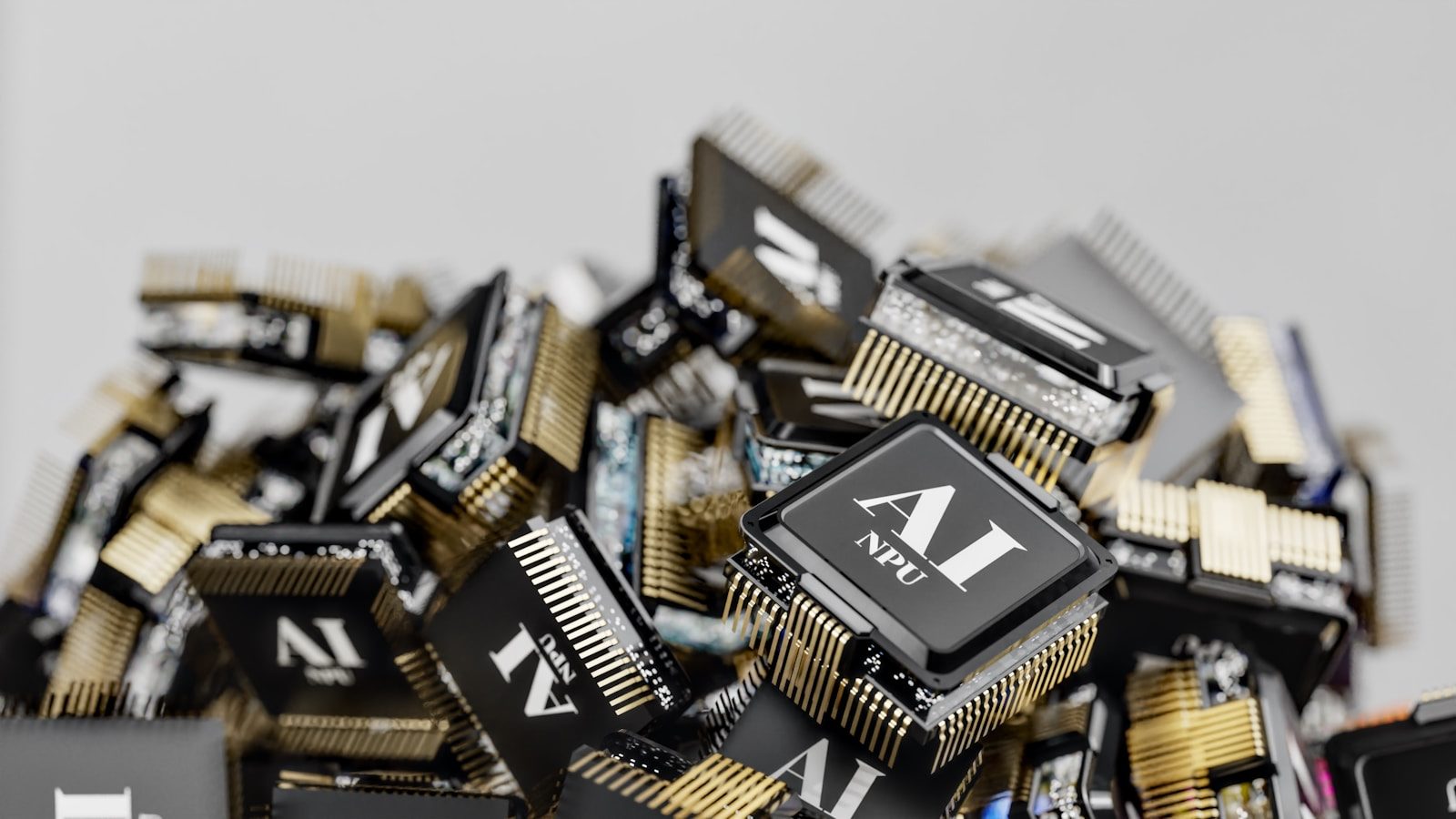
We are also seeing a shift toward local storage and local execution. As privacy concerns grow and hardware becomes more efficient, the ability to run a “small” but capable model on a local device is becoming a key differentiator. This is where the chip makers have a second advantage. By building specialized AI cores into consumer laptops and phones, they are enabling a new kind of decentralized power. A user who can run their own model does not need to pay a subscription or share their data with a cloud provider. This is the primary area where public perception and reality diverge. Most people think the future is entirely in the cloud, but the real innovation is happening in the hybrid space. The winners will be those who can seamlessly move a task between a local device and a massive cloud cluster based on the requirements of the task. This requires a deep integration of hardware and software that few companies can manage. It is about managing the trade-offs between speed, cost, and privacy.
Have an AI story, tool, trend, or question you think we should cover? Send us your article idea — we’d love to hear it.Finally, we must consider the role of open source. There is a persistent belief that open source models will democratize the industry and break the monopolies. While open source is vital for research and transparency, it faces a major hurdle: the cost of inference. Even if a model is free to download, it is not free to run at scale. The hardware requirements remain a barrier to entry. This means that even open source models often end up being hosted on the same cloud platforms owned by the giants. The “freedom” of open source is limited by the “physics” of the hardware. This is the ultimate reality of the AI industry analysis in the current year. You can have the best code in the world, but if you do not have the silicon to run it, you are just a spectator. The power map is a map of physical assets as much as it is a map of intellectual ones.
The Reality of the Next Era
The power map of 2026 is not a collection of logos or a list of the wealthiest people. It is a complex web of dependencies and structural advantages. The companies that truly matter are those that have secured their position in the three pillars: compute, distribution, and the user relationship. They are the ones who can afford to keep spending billions on infrastructure while their competitors are forced to lease it. This has created a world where the appearance of competition hides a reality of deep consolidation. For the user, the stakes are high. We are gaining incredible capabilities, but we are also becoming part of a system that is increasingly difficult to exit. The challenge for the coming years will be to find a balance between the benefits of these powerful tools and the need for individual and national autonomy. The map is already drawn. Now we have to figure out how to live within its borders.
Editor’s note: We created this site as a multilingual AI news and guides hub for people who are not computer geeks, but still want to understand artificial intelligence, use it with more confidence, and follow the future that is already arriving.
Found an error or something that needs to be corrected? Let us know.