Why the AI Buildout Is Becoming an Infrastructure Race

Have you ever noticed how everyone talks about artificial intelligence like it is a magical cloud floating in the sky? We use it to write emails or generate funny pictures of cats in space suits and it feels totally weightless. But here is the big secret of that most people miss. AI is actually incredibly heavy. It is made of mountains of silicon and miles of copper wire. It lives in giant buildings that hum with the sound of thousands of fans. Right now we are seeing a massive shift where the focus is moving away from just the clever software and toward the hard physical stuff that makes it run. This is why the world is suddenly obsessed with building more power plants and securing more land. It is not just about who has the smartest code anymore. It is about who has the biggest and best engines to run that code. The takeaway is simple. The future of your favorite AI tools depends on a giant global construction project that is happening right under our feet.
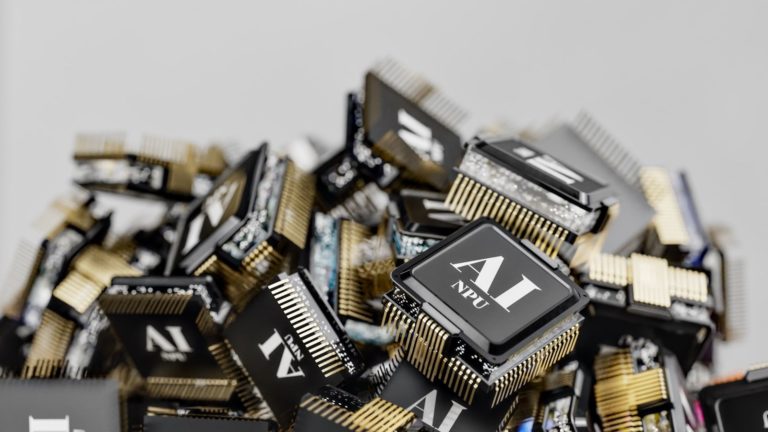
To understand why this is happening we need to look at what changed recently. In the past we thought that making AI better was just about writing better instructions. But we found out that if you take teh same instructions and run them on much bigger machines they get much smarter. Think of it like a professional kitchen. You can have the best recipe in the world but if you only have one tiny stove you can only feed a few people. If you want to feed a whole city you need a massive warehouse full of industrial grade ovens and a small army of chefs. In this world the GPUs are the high tech ovens. These are special chips that are much faster at doing math than the ones in your laptop. Companies are buying these by the hundreds of thousands. They are packing them into data centers that can be the size of several football fields. Each one of these centers might cover 50000 m2 or more of space just to hold the racks of computers. It is a physical race to build the biggest kitchen ever seen.
Found an error or something that needs to be corrected? Let us know.This shift is creating a huge impact all around the globe because it changes who gets to lead in technology. It used to be that a few smart people in a garage could change everything with just a laptop. While that is still partly true the big players now need billions of dollars to build the **physical infrastructure** required for the next generation of tools. This has turned AI into a matter of national importance. Countries are now looking at their power grids and wondering if they have enough electricity to keep up. It is not just about tech companies anymore. It is about energy providers and construction firms. Governments are even talking about *sovereign AI* which means they want to own the data centers and the chips within their own borders so they do not have to rely on anyone else. This is great news for local economies because these projects bring massive investments and high tech jobs to places that used to be just quiet farmland. It is a global building boom that is connecting the world in a very literal way.
The Power Behind Your Daily Chat
We often underestimate how much work goes into a single request. When you ask a bot to help you plan a vacation it feels instant. In reality that request travels through underwater cables and zips into a data center where thousands of chips work together for a split second to give you an answer. This is why infrastructure matters for your user experience. If the buildings are too far away or the chips are too slow you get lag. If there is not enough power the service might go down. This is what people often overestimate. They think AI is just getting smarter on its own. What they underestimate is the sheer amount of physical energy and hardware needed to make that intelligence feel smooth and natural. The race is on to make sure that as more people use these tools the system behind them does not break under the pressure. It is a massive logistics puzzle that involves moving millions of parts across the world every single day.
Let us look at a day in the life of Sarah who runs a small bakery in a quiet town. Sarah uses AI to help her manage her inventory and write her social media posts. She thinks she is just using an app on her phone but she is realy part of a global chain. When she wakes up and asks her assistant for the weather the request might bounce to a data center in Virginia. When she uses a tool to design a new logo that work might happen on a cluster of chips in Iowa. For Sarah this means she can compete with much bigger businesses because she has access to world class computing power for a few dollars a month. This is only possible because companies like Microsoft are spending billions to make sure those data centers are everywhere. It turns a local bakery into a tech powered business without Sarah ever needing to see a single server rack. This is the real world impact of the infrastructure race. It brings high level power to everyday people in a way that feels like magic even though it is built of steel and glass.
Is there a limit to how much we can build before we run out of resources or space? This is a question that many experts are asking with a sense of friendly curiosity because the growth is so fast. We know that these giant computer warehouses need a lot of electricity and they also need water to keep the chips from getting too hot. Some people wonder if we can find enough green energy to power it all without putting a strain on the planet. It is an exciting challenge for engineers who are now looking at things like small nuclear reactors or massive solar farms to keep the lights on. We are also seeing new ways to recycle the heat from these buildings to warm up nearby homes or greenhouses. It is a puzzle that keeps evolving and it is fun to watch how the industry finds creative ways to be more efficient while still growing at a record pace.
The Geeky Side of the Grid
For those who love the technical details the infrastructure race is all about the interconnects and the power density. We are moving past the era where you could just put some servers in a room and call it a day. Modern AI clusters require specialized networking that allows thousands of GPUs to talk to each other as if they were one single giant brain. This involves proprietary cables and switches that handle massive amounts of data every microsecond. We are also seeing a big push toward edge computing where some of the AI work happens closer to the user to reduce latency. This might mean smaller data centers in every major city instead of just a few giant ones in the middle of nowhere. API limits are often a result of these physical constraints. If a company does not have enough chips they have to limit how many requests you can make. This is why local storage and running smaller models on your own device is becoming a hot topic. If you can run a model on your own hardware you do not have to wait in line for a spot in a data center.
Another big part of the geek section is the shift in how we think about cooling. Standard air conditioning is not enough for the newest chips which can get incredibly hot. Many new builds are using liquid cooling where water or special fluids run directly over the hardware to soak up the heat. This is much more efficient and allows for even more chips to be packed into the same amount of space. We are also seeing a lot of innovation in how data is stored. Fast access to memory is just as important as the speed of the processor. If the chips have to wait for data to arrive they are just sitting there wasting power. This is why the latest designs focus on keeping the storage as close to the chips as possible. It is a beautiful dance of hardware engineering that happens at a scale most of us can barely imagine. According to the International Energy Agency the energy demand from these centers is a major focus for global planning in .
Have an AI story, tool, trend, or question you think we should cover? Send us your article idea — we’d love to hear it.The Hardware Leaders
When we look at who is winning this race it usually comes down to who can get their hands on the best hardware first. Companies like NVIDIA have become the most important players because they design the chips that everyone else needs. But it is not just about the chips. It is about the companies that build the power substations and the cooling systems. Even the companies that make the specialized glass for fiber optic cables are seeing a huge surge in demand. This is a complete ecosystem that reaches into almost every part of the industrial world. If you want to see the latest updates on how this hardware is changing the world you can check out the latest reports on AI infrastructure news to stay ahead of the curve. The race is far from over and every month brings a new announcement about a bigger data center or a more efficient power source.
BotNews.today uses AI tools to research, write, edit, and translate content. Our team reviews and supervises the process to keep the information useful, clear, and reliable.
Editor’s note: We created this site as a multilingual AI news and guides hub for people who are not computer geeks, but still want to understand artificial intelligence, use it with more confidence, and follow the future that is already arriving.
The bottom line is that AI is no longer just a software story. It is a story about the physical world and our ability to build massive things. We are in the middle of a race to create the foundation for the next century of technology. While it is easy to get lost in the talk of algorithms and digital brains the real action is happening in construction sites and power plants. This is an optimistic time because it is forcing us to innovate in energy and engineering in ways we never thought possible. The big question that remains is how we will balance this hunger for power with our goals for a cleaner planet. It is a live question that will keep the tech world busy for a long time. For now we can just enjoy the fact that every time we use an AI tool there is a whole world of incredible machinery working hard to make our lives a little bit easier.
Have a question, suggestion, or article idea? Contact us.