What Data Centre Growth Means for the AI Race

The Physical Limit of Virtual Intelligence
The race for artificial intelligence has moved out of the research lab and into the construction site. For years, the industry focused on the elegance of code and the size of neural networks. Today, the primary constraints are much more primitive. They are land, power, water, and copper. If you want to build the next generation of large language models, you do not just need a better algorithm. You need a massive building filled with thousands of specialized chips that consume as much electricity as a small city. This shift from software to heavy infrastructure has changed the nature of tech competition. It is no longer just about who has the best engineers. It is about who can secure a connection to the electrical grid and who can convince local governments to let them build a facility that uses millions of gallons of water for cooling.
Every time a user types a prompt into a chatbot, a physical chain of events begins. That request does not exist in a cloud. It exists in a rack of servers. These servers are becoming denser and hotter. The growth of these facilities is the most significant physical expansion in the history of the tech industry. It is a massive bet on the future of compute. But this growth is hitting a wall of physical reality. We are seeing a move away from the abstract idea of the internet toward a world where data centers are as vital and as controversial as oil refineries or power plants. This is the new reality of the AI race. It is a competition for the fundamental resources of the physical world.
From Code to Concrete and Copper
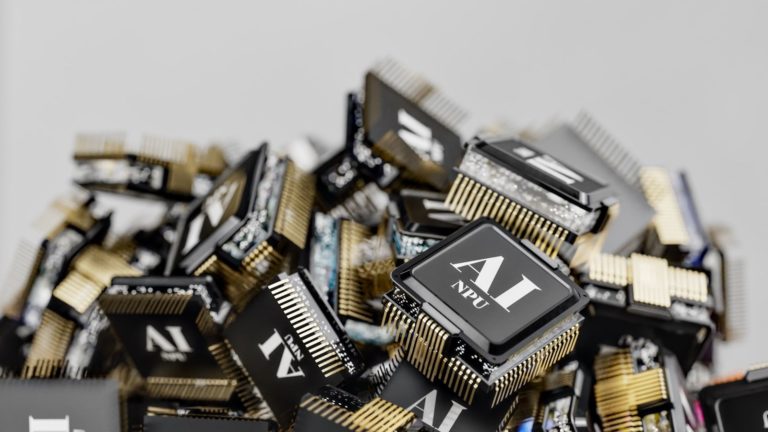
Building a modern data center is an exercise in industrial engineering. In the past, a data center might have been a repurposed warehouse with some extra air conditioning. Now, these facilities are purpose-built machines designed to handle the intense heat of AI chips. The most important factor is power. A single modern AI chip can draw more than 700 watts. When you pack tens of thousands of these into a single building, the power requirements reach hundreds of megawatts. This is not just about the cost of electricity. It is about the availability of it. In many parts of the world, the electrical grid is already at capacity. Tech companies are now competing with residential neighborhoods and factories for the same limited supply of electrons.
Land is the next hurdle. You cannot just build these facilities anywhere. They need to be near fiber optic lines to reduce latency. They also need to be in areas where the ground is stable and the climate is manageable. This has led to a massive concentration of data centers in places like Northern Virginia. This region handles a huge portion of global internet traffic. But even there, the land is running out. Companies are now looking at more remote locations, but those sites often lack the necessary grid connections. This creates a chicken and egg problem. You can find the land, but you cannot get the power. Or you can find the power, but the local permitting process takes years. Permitting has become a major bottleneck. Local governments are increasingly skeptical of these projects because they take up space and use resources but provide relatively few long-term jobs.
Cooling is the third pillar of this infrastructure. AI chips generate an incredible amount of heat. Traditional air cooling is no longer sufficient for the highest density racks. Many new facilities are moving to liquid cooling. This involves running pipes of water or specialized coolant directly to the chips. This requires a massive amount of water. In some cases, a single data center can use hundreds of millions of gallons of water per year. This puts tech companies in direct competition with local agriculture and residential water needs. In drought-prone areas, this has become a political flashpoint. The industry is trying to move toward closed-loop systems that recycle water, but the initial requirements remain staggering. These are the practical constraints that define the current era of tech growth.
The Geopolitics of High Performance Compute
Data centers are no longer just corporate assets. They are national priorities. Governments around the world are realizing that compute power is a form of national strength. This has given rise to the concept of sovereign AI. Countries want their own data centers located within their borders to ensure data privacy and national security. They do not want to rely on facilities located in other jurisdictions. This is leading to a fragmented global infrastructure. Instead of a few massive hubs, we are seeing a push for localized data centers in every major economy. This is a significant shift from the centralized model that dominated the last decade. It makes the infrastructure race even more complex because companies must navigate different regulatory environments in every country.
This geopolitical dimension has made data centers a target for industrial policy. Some governments are offering massive subsidies to attract data center developers. They see these buildings as the foundation of a modern economy. Others are moving in the opposite direction. They are concerned about the strain on their national grids and the enviornmental impact of such high energy usage. For example, some cities have placed moratoriums on new data center construction until they can upgrade their electrical infrastructure. This creates a patchwork of availability. A company might be able to build in one country but find itself blocked in another. This geographic distribution matters because it affects the latency and performance of AI models for users in those regions. If a country lacks local compute, its citizens will always be at a disadvantage in the AI race.
The struggle for these assets is also a struggle for supply chains. The components needed to build a data center are in short supply. This includes everything from the chips themselves to the massive transformers needed to connect to the grid. The lead times for some of this equipment can be two or three years. This means that the winners of the AI race in 2026 were determined by decisions made years ago. Companies that secured their power and equipment early have a massive lead. Those trying to enter the market now are finding that the door is partially closed. The physical world moves much slower than the world of software. You can write a new piece of code in a day, but you cannot build a substation in a day. This reality is forcing tech companies to think like industrial giants.
When Large Language Models Meet Local Power Grids
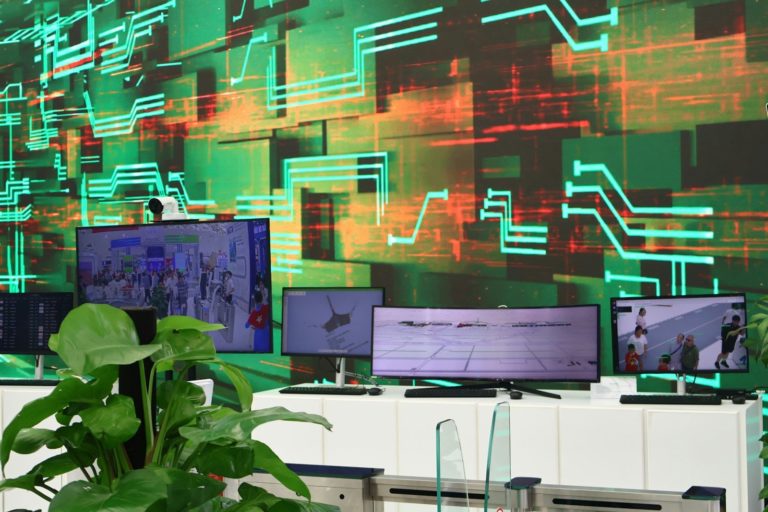
To understand the impact of this growth, consider a typical day in the life of a modern data center. Imagine a facility located on the outskirts of a mid-sized city. Inside, there are rows of racks, each roughly the size of a refrigerator. These racks are packed with GPUs. As the sun rises and people start their workday, the demand for AI services spikes. Thousands of requests for code completion, image generation, and text summarization flood into the building. Each request triggers a surge in power consumption. The cooling fans spin faster. The liquid cooling pumps ramp up. The heat generated by these chips is so intense that you can feel it through the insulated walls of the server room. This is the sound of the modern economy. It is a constant, low-frequency hum that never stops.
Outside the walls, the impact is felt by the community. The local utility company has to manage the load. If the data center draws too much power, it could cause instability in the grid. This is why many data centers have massive banks of batteries and diesel generators on site. They are essentially their own mini-utilities. But these generators create noise and emissions, leading to local resistance. Residents in nearby neighborhoods might complain about the constant hum or the sight of massive power lines being run through their backyards. They see a building that covers 500,000 m2 but only employs a few dozen people. They wonder what they are getting in exchange for the strain on their local resources. This is where the technical meets the political. The data center is a marvel of engineering, but it is also a neighbor that uses a lot of electricity and water.
The scale of this is hard to visualize. A single large data center campus can consume as much power as 100,000 homes. When a tech giant announces a new 10 billion dollar project, they are not just buying servers. They are building a massive industrial complex. This includes dedicated water treatment plants and private electrical substations. In some cases, they are even investing in nuclear power to ensure a steady supply of carbon-free energy. This is a radical departure from the way tech companies used to operate. They are no longer just tenants in someone else’s building. They are the primary drivers of infrastructure development in many regions. This growth is changing the physical appearance of our cities and the way our utilities are managed. It is a massive, visible manifestation of teh digital age.
The friction is not just about resources. It is about the speed of change. A local power grid is designed to grow at a predictable rate over decades. The AI boom has compressed that growth into a few years. Utilities are struggling to keep up. In some regions, the wait time for a new grid connection is now over five years. This has turned grid access into a valuable commodity. Some companies are even buying up old industrial sites just because they already have a high-capacity power connection. They do not care about the buildings. They care about the copper in the ground. This is the level of desperation in the market. The AI race is being fought in the trenches of local planning commissions and utility boardrooms.
Hard Questions for the Compute Age
As we continue this expansion, we must ask difficult questions about the hidden costs. Who actually benefits from this massive build-out? While AI services are available globally, the environmental and infrastructure costs are often localized. A community in a rural area might see its water table drop to support a data center that serves users on the other side of the planet. We also have to consider the long-term sustainability of this model. If every major company and government wants its own massive compute cluster, the total global energy demand will be astronomical. Is this the best use of our limited energy resources? We are essentially trading physical energy for digital intelligence. That is a trade-offs that needs more public debate.
There is also the question of privacy and control. As data centers become more centralized in the hands of a few tech giants, those companies gain an incredible amount of power. They are not just the providers of software. They are the owners of the physical infrastructure that makes modern life possible. If a single company owns the data centers, the chips, and the models, they have a level of vertical integration that is unprecedented. This creates a massive barrier to entry for smaller competitors. How can a startup compete when they cannot even get a power permit? The physical reality of AI infrastructure might be the ultimate anti-competitive force. It turns a market of ideas into a market of capital and concrete.
Finally, we have to look at the resilience of this system. By concentrating so much compute power in a few geographic hubs, we are creating single points of failure. A natural disaster or a targeted attack on a major data center hub could have global consequences. We saw a hint of this during the pandemic when supply chain disruptions slowed down data center expansions. But the risks are even higher now. Our entire economy is being built on top of these facilities. If the grid fails or the cooling water runs out, the AI stops. This is the paradox of the digital age. Our most advanced technology is entirely dependent on the most basic physical systems. We are building a futuristic world on a very fragile foundation.
BotNews.today uses AI tools to research, write, edit, and translate content. Our team reviews and supervises the process to keep the information useful, clear, and reliable.
The Architecture of the AI Backbone
For those looking at the technical side, the shift in data center design is profound. We are moving away from general-purpose cloud computing toward specialized AI factories. In a traditional data center, the goal was to host thousands of different applications for thousands of different customers. The workload was unpredictable but generally low intensity. In an AI factory, the entire building is often dedicated to a single task, such as training a massive model. This allows for much higher levels of optimization. The networking alone is a massive challenge. To train a model across thousands of GPUs, you need a network that can handle incredible amounts of data with almost zero latency. This has led to the adoption of technologies like InfiniBand and high-speed Ethernet switches that operate at 800Gbps.
Have an AI story, tool, trend, or question you think we should cover? Send us your article idea — we’d love to hear it.Storage is another critical factor. Training an AI model requires feeding it petabytes of data as fast as the GPUs can process it. This has made traditional hard drives obsolete for these workloads. Everything is moving to high-speed NVMe flash storage. But even the fastest storage can become a bottleneck if the data pipeline is not designed correctly. This is why we are seeing more focus on local storage and edge computing. By moving the data closer to the compute, companies can reduce the strain on the network. However, the sheer size of the models makes this difficult. A state-of-the-art model can be hundreds of gigabytes in size, making it hard to run on anything other than a massive server cluster. This keeps the power in the hands of those who can afford the big facilities.
We are also seeing a change in how APIs and local storage interact. Many developers are trying to find ways to run smaller versions of these models on local hardware to avoid the high costs and latency of the cloud. This is known as local inference. While it works for simple tasks, the most capable models still require the massive resources of a data center. This creates a tiered system. The “smartest” AI lives in the giant, water-cooled facilities, while simpler, faster AI lives on your phone or laptop. Managing the hand-off between these two environments is the next big challenge for software developers. They have to balance the need for performance with the reality of limited local resources. This is where AI infrastructure insights become essential for any company trying to build a modern tech stack.
The Reality of the Infrastructure Race
The growth of data centers is the most honest indicator of where the AI race is headed. You can ignore the marketing hype and the flashy demos, but you cannot ignore the construction cranes and the power substations. These buildings are the physical proof of the industry’s ambitions. They show that the major players believe AI is not a passing trend but a fundamental shift in how we process information. But this shift comes with a price. The constraints of the physical world are much less flexible than the constraints of software. You cannot just scale a power grid with a few clicks. You cannot download more water.
As we move forward, the winners of the AI race will be the companies and nations that can best manage these physical resources. It will be the ones who find innovative ways to cool their chips, the ones who secure long-term energy contracts, and the ones who can build facilities that are seen as assets rather than burdens by their local communities. The virtual world is finally meeting the physical world, and the result is a massive, complex, and often messy expansion. The future of AI is being built right now, one megawatt and one gallon of water at a time. It is a race against time, but more importantly, it is a race against the limits of our planet’s resources.
Editor’s note: We created this site as a multilingual AI news and guides hub for people who are not computer geeks, but still want to understand artificial intelligence, use it with more confidence, and follow the future that is already arriving.
Found an error or something that needs to be corrected? Let us know.