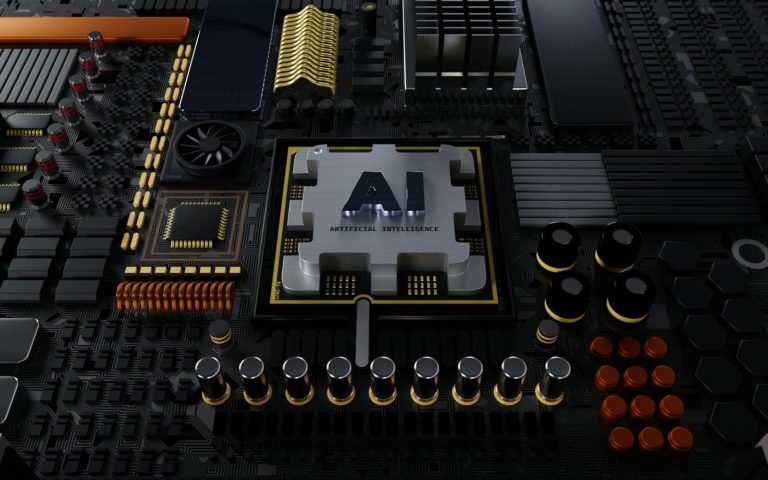
Why AI Is Really a Story About Hardware as Much as Software

The common perception of artificial intelligence focuses almost entirely on the code. People talk about large language models as if they exist in a vacuum of pure logic. They discuss the brilliance of an algorithm or the nuance of a chatbot response. This perspective misses the most critical factor in the current era of technology. AI is not just a software story. It is a story about heavy industry. It is about the massive consumption of electricity and the physical limits of silicon. Every time a user asks a question to a chatbot, a chain of physical events occurs in a data center miles away. This process involves specialized chips that are currently the most valuable commodities on earth. If you want to understand why some companies are winning and others are failing, you have to look at the hardware. The software is the steering wheel, but the hardware is the engine and the fuel. Without the physical infrastructure, the most advanced model in the world is just a collection of useless math.
The Silicon Ceiling
For decades, software development followed a predictable path. You wrote code, and it ran on standard central processing units or CPUs. These chips were generalists. They could handle a variety of tasks one after another. However, AI changed the requirements. Modern models do not need a generalist. They need a specialist that can perform billions of simple mathematical operations at the same time. This is called parallel processing. The industry shifted its focus to graphics processing units or GPUs. These chips were originally designed for rendering video games, but researchers discovered they were perfect for the matrix multiplication that drives neural networks. This shift created a massive bottleneck. You cannot simply download more intelligence. You have to build it with physical components that are incredibly difficult to manufacture. The world is currently facing a reality where the speed of AI progress is dictated by how fast companies like TSMC can etch circuits onto silicon wafers.
This physical constraint has created a new kind of class system in the tech world. There are the compute rich and the compute poor. A company with ten thousand high end chips can train a model that a company with one hundred chips cannot even begin to attempt. This is not a matter of talent or clever coding. It is a matter of raw power. The misconception that AI is an egalitarian field where anyone with a laptop can compete is fading. The entry price for the top tier of AI development is now measured in billions of dollars of hardware. This is why we see the largest tech companies in the world spending unprecedented amounts on infrastructure. They are not just buying servers. They are building the factories of the future. The hardware is the moat that protects their business models.
The Geopolitics of Sand and Power
The shift toward hardware centric AI has moved the center of gravity for the tech industry. It is no longer just about Silicon Valley. It is about the Taiwan Strait and the power grids of northern Virginia. The manufacturing process for the most advanced AI chips is so complex that only one company, TSMC, can do it at scale. This creates a single point of failure for the entire global economy. If production in Taiwan stops, AI progress stops. This is why governments are now treating chip manufacturing as a matter of national security. They are subsidizing the construction of new factories and placing export controls on high end hardware. The goal is to ensure that their domestic industries have access to the physical components needed to stay competitive.
Beyond the chips themselves, there is the issue of energy. AI models are incredibly thirsty for power. A single query can consume significantly more electricity than a standard search engine request. This is putting a massive strain on local power grids. In places where data centers are concentrated, the demand for electricity is growing faster than the supply. This has led to a renewed interest in nuclear energy and other high capacity power sources. The International Energy Agency has noted that data centers could double their electricity consumption by . This is not a software problem that can be optimized away with better code. It is a physical reality of how these systems operate. The environmental impact of AI is not found in the lines of code but in the cooling systems and the carbon footprint of the power plants that keep the servers running. Organizations must account for these physical costs when they calculate the value of their AI initiatives.
The High Cost of Every Prompt
To understand the practical impact of hardware constraints, consider a day in the life of a startup founder in the current market. Let us call her Sarah. Sarah has a brilliant idea for a new medical diagnostic tool. She has the data and the talent. However, she quickly realizes that her biggest obstacle is not the algorithm. It is the cost of inference. Every time a doctor uses her tool, she has to pay for time on a high end GPU in the cloud. These costs are not static. They fluctuate based on global demand. During peak hours, the price of compute can spike, eating into her margins. She spends more time managing her cloud credits and optimizing her hardware usage than she does on actual medical research. This is teh reality for thousands of creators today. They are tethered to the physical availability of hardware.
For the average user, this manifests as latency and limitations. Have you ever noticed that a chatbot becomes slower or less capable during certain times of the day? That is often because the provider is hitting a hardware limit. They are rationing their available compute to handle the load. This is a direct consequence of the physical nature of AI. Unlike traditional software, which can be copied and distributed at almost zero marginal cost, every instance of an AI model running requires a dedicated slice of hardware. This creates a ceiling on how many people can use these tools at once. It also explains why many companies are moving toward smaller models that can run on local devices like phones or laptops. They are trying to offload the hardware burden from their data centers to the end user. This shift is driving a new cycle of consumer hardware upgrades. People are buying new computers not because their old ones are broken, but because their old ones lack the specialized chips needed to run modern AI features locally.
BotNews.today uses AI tools to research, write, edit, and translate content. Our team reviews and supervises the process to keep the information useful, clear, and reliable.
The business power dynamics are also shifting. In the past, a software company could scale globally with a very small physical footprint. Today, the companies with the most power are those that own the infrastructure. This is why NVIDIA has become one of the most valuable companies in the world. They provide the picks and shovels for the AI gold rush. Even the most successful AI software companies are often just tenants in the data centers of their larger competitors. This creates a precarious situation. If the landlord decides to raise the rent or prioritize their own internal projects, the software company has nowhere else to go. The physical layer is the ultimate source of leverage in the modern tech economy. It is a return to a more industrial form of competition where scale and physical assets matter more than just clever ideas.
The Questions We Are Not Asking
As we move deeper into this hardware dependent era, we must ask difficult questions about the hidden costs. Who truly benefits when the barriers to entry are so high? If only a handful of companies can afford the hardware needed to build the most advanced models, what does that mean for competition and innovation? We are seeing a concentration of power that is unprecedented in the history of technology. This centralization creates a massive risk for privacy and censorship. If all AI processing happens on a few thousand servers owned by three or four companies, those companies have total control over what can be said and what can be done with the technology. What happens to the sovereignty of smaller nations that cannot afford to build their own AI infrastructure?
There is also the question of the physical materials required to build these machines. AI hardware depends on rare earth minerals and complex supply chains that are often located in unstable regions. The environmental cost of mining these materials is rarely discussed in the context of AI progress. We talk about the elegance of the model while ignoring the open pit mines and the toxic waste produced during the manufacturing process. Is the benefit of a slightly better chatbot worth the ecological damage caused by the hardware it requires? Furthermore, we must consider the long term sustainability of the current energy consumption trends. According to reports from the International Energy Agency, the growth in data center power demand is already outstripping the addition of renewable energy in some regions. Are we building a technological future that the planet cannot actually support? These are not technical bugs to be fixed. They are fundamental trade offs that come with the decision to pursue AI at this scale. We need to be honest about the fact that AI is a physical intervention in the world, not just a digital one.
Architecture and Latency
For the power users and developers, the hardware story gets even more specific. It is not just about having a GPU. It is about the specific architecture of that GPU. One of the biggest bottlenecks in modern AI is not the speed of the processor, but the speed of the memory. This is known as the memory wall. High Bandwidth Memory or HBM is essential for keeping the processor fed with data. If the memory is too slow, the processor sits idle, wasting expensive compute cycles. This is why the latest chips from major manufacturers focus so heavily on memory bandwidth and capacity. If you are running a local model, the amount of VRAM on your card is the single most important factor. It determines the size of the model you can load and the speed at which it can generate text.
Workflow integration is also becoming a hardware problem. Many professional tools are now integrating AI features that require specific API limits or local acceleration. If you are using a cloud based API, you are subject to the provider’s hardware availability. This can lead to unpredictable latency that ruins the user experience. For local storage, the requirements are also increasing. Storing large models and the datasets used to fine tune them requires terabytes of fast NVMe storage. We are also seeing the rise of specialized interconnects like NVLink, which allow multiple GPUs to talk to each other at incredible speeds. This is necessary because the largest models no longer fit on a single chip. They have to be spread across dozens or even hundreds of chips, all working in perfect synchronization. If the physical connection between those chips is too slow, the entire system breaks down. This level of hardware complexity is a far cry from the days of simply writing a script and running it on a laptop. You can find more detailed guides on optimizing your local setup at the AI Magazine website. Understanding these technical specs is no longer optional for anyone who wants to work at the edge of this field. The difference between a successful deployment and a failure often comes down to how well you manage the physical constraints of your hardware stack.
The Physical Reality
The narrative of AI as a purely digital phenomenon is dead. The reality is that AI is a physical industry that requires massive amounts of land, water, energy, and silicon. The progress we see in the coming years will be determined as much by breakthroughs in materials science and power generation as by breakthroughs in machine learning. We are entering a period where the physical world is reasserting its dominance over the digital world. Companies that understand this and invest in their own hardware and energy supplies will be the ones that lead. Those that treat hardware as an afterthought will find themselves priced out of the market. The most important thing to remember is that every bit of digital intelligence has a physical home. By , the map of the AI world will look a lot like a map of the world’s most powerful industrial hubs. The silicon ceiling is real, and we are all living under it.
Editor’s note: We created this site as a multilingual AI news and guides hub for people who are not computer geeks, but still want to understand artificial intelligence, use it with more confidence, and follow the future that is already arriving.
Found an error or something that needs to be corrected? Let us know.