What Publishers Need to Understand About Search in 2026

Search is no longer a gateway to the web. It is a destination. By 2026, the traditional model of clicking a link to find an answer has been replaced by synthesis engines that provide the information directly on the results page. For publishers, this means the era of easy referral traffic is over. The focus has shifted from winning the click to winning the citation. If your content is used to train or inform an AI answer, you have visibility, but you do not necessarily have a visitor. This fundamental change requires a complete rethink of how media companies value their output. Success is now measured by brand influence and direct user relationships rather than raw page views from Google. The transition is painful for those relying on high volume and low intent traffic. However, for those providing deep expertise, the new environment offers a way to become the primary source for the machines that now talk to the world.
How Synthesis Engines Replace Traditional Indexing
The mechanics of finding information have moved away from keyword matching toward intent processing. In the past, a search engine acted as a librarian pointing you to a book. Today, the engine reads the book for you and provides a summary. This shift is driven by large language models that sit on top of the traditional index. These models do not just list sources. They weigh the credibility of information and package it into a coherent paragraph. This is the answer engine model. It prioritizes speed and convenience for the user, often at the expense of the creator who provided the underlying data.
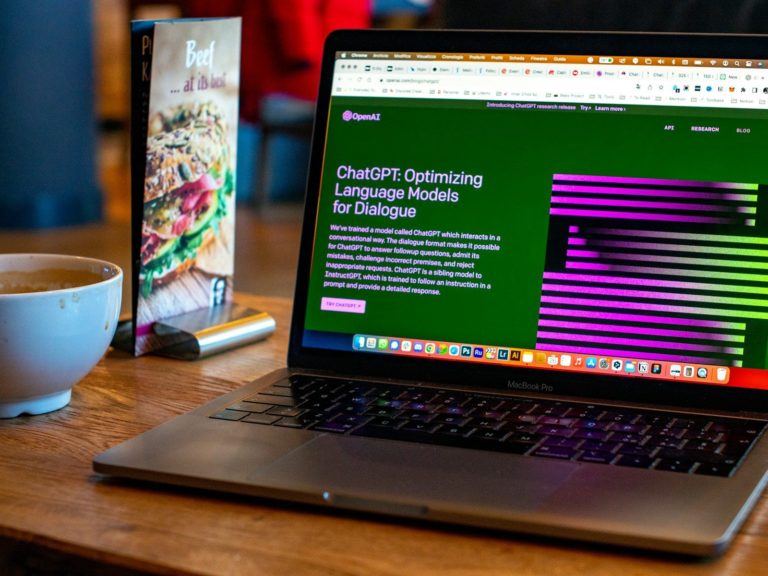
Publishers now face a reality where their best work is condensed into three sentences by a chatbot. This is not just happening on Google. Platforms like Perplexity and OpenAI have created discovery patterns that bypass the website entirely. Users are increasingly comfortable with chat interfaces that allow for follow up questions. This means the initial query is just the start of a conversation, not a search for a specific URL. The search engine has become a walled garden of information where the walls are built from the content of the open web. This change is permanent. It is not a temporary trend or a minor update to an algorithm. It is a total restructuring of the information economy.
BotNews.today uses AI tools to research, write, edit, and translate content. Our team reviews and supervises the process to keep the information useful, clear, and reliable.
The distinction between visibility and traffic is the most critical concept for any publisher to grasp. You might appear in the citations of a major AI overview, but that citation may only yield a fraction of the clicks a top three blue link once did. This is the visibility trap. Being the source of truth for an AI is a matter of prestige, but it does not pay the bills if your business model depends on ad impressions. Publishers are seeing their content quality signals used to train the very tools that reduce their reach. It is a parasitic relationship that is forcing a move toward subscription models and gated communities.
The Global Erosion of the Click
This shift is not limited to the US market. Global search behavior is trending toward zero click results at an accelerating pace. According to data from various research groups, more than 60 percent of searches now end without a click to a third party website. In regions with high mobile penetration, this number is even higher. Users on mobile devices want immediate answers without waiting for a page to load or managing multiple tabs. This behavior is being reinforced by the integration of AI into mobile operating systems. When the phone itself can answer the question, the browser becomes a secondary tool.
International publishers are also dealing with localized AI models that prioritize regional sources. This has created a fragmented environment where visibility depends on how well a site is indexed by specific local engines. The cost of maintaining high quality content that satisfies these engines is rising, while the financial return is falling. Many media houses in Europe and Asia are now looking at collective bargaining with tech firms to ensure they are compensated for the use of their data. They recognize that without a new deal, the incentive to produce original reporting will vanish. This shift in how we consume information is a core focus at AI Magazine as we track the evolution of the web. The global impact is a thinning of the middle class of the internet. Small to mid sized publishers who lack a strong brand are being squeezed out by the efficiency of automated answers.
Survival Strategies for the Zero Click Economy
A day in the life of a content strategist in 2026 looks very different than it did five years ago. Consider Sarah, who manages a tech news site from her office of 120 m2 in downtown Chicago. Her morning does not start with checking Google Search Console for keyword rankings. Instead, she looks at attribution shares across three major answer engines. She is checking to see if her site was the primary source for a trending topic in the AI overviews. Sarah knows that **visibility is not traffic**, so she focuses on how many users actually followed the citation to her site. Her goal is to create content that is so deep and authoritative that the AI summary is insufficient, forcing the user to click through for the full context.
Sarah has shifted her team away from short, newsy updates that are easily summarized. Instead, they produce long form investigations and technical guides. They use specific schema markup to ensure the AI knows exactly which parts of their articles are the most important. This is a defensive play. By making the content easy for the AI to understand, they increase the chance of being cited. But by making the content complex, they ensure the user still needs to visit the site. Sarah also spends more time on her email newsletter and her private community platform. She knows that the only way to survive is to own the relationship with the audience directly. The impact on teh bottom line is significant. Her site gets fewer visitors, but the visitors she does get are more loyal and more likely to pay for a subscription. This is the new reality of publishing. You cannot rely on the kindness of search engines anymore.
- Prioritize original research that cannot be replicated by an LLM.
- Focus on brand building to drive direct type in traffic.
- Use structured data to clearly define your unique insights.
- Develop platforms like newsletters and apps that you control.
- Monitor citation rates as a key performance indicator.
The Hidden Costs of Automated Answers
We must ask difficult questions about the long term viability of this model. If search engines provide all the answers without sending traffic to the sources, who will continue to fund the creation of those answers? This is a fundamental flaw in the current trajectory. We are seeing a depletion of the information commons. When a publisher sees a 40 percent drop in traffic because of an AI overview, they are forced to cut staff. When they cut staff, they produce less content. Eventually, the AI has nothing new to learn from. This creates a feedback loop of declining quality that could degrade the entire internet. Who pays for the journalist to sit in a courtroom or the scientist to run a study if the results are immediately harvested by a bot?
There is also the issue of privacy and intent. When you search via a chat interface, you are giving the engine a much deeper look into your thought process than a simple keyword query. These engines are building comprehensive profiles of user intent that go far beyond what was possible in the previous era. This data is incredibly valuable for advertising, but it is often collected without the user fully understanding the trade off. We are moving toward a world where the search engine knows what you want before you even finish typing. This level of predictive power is convenient, but it carries a high cost in terms of personal autonomy. Are we willing to trade the diversity of the open web for the convenience of a single, synthesized answer? The reality is that we are already making that trade every day.
Technical Frameworks for the New Discovery Model
For the technical teams, the challenge is managing the interaction between their servers and the AI crawlers. In 2026, many publishers began experimenting with blocking certain bots, but they soon realized that being invisible to the AI meant being invisible to the user. The focus has moved to Retrieval-Augmented Generation (RAG) optimization. This involves structuring your site so that an AI can easily retrieve and cite your content in a way that remains accurate. It also involves managing API limits. Many AI engines now offer direct integrations for publishers, but these often come with strict limits on how much data can be pulled and how it can be used. Managing these connections has become a full time job for webmasters.
Local storage and edge computing are also playing a larger role. To stay relevant, publishers are looking at ways to serve content faster than ever, often using local embeddings that allow an AI to search their specific database without a full crawl. This helps in maintaining the integrity of the information. It also ensures that the most recent updates are available to the synthesis engines in real time. The technical stack for a modern publisher now includes vector databases and custom LLM tuning. This is the geek section of the business that used to be ignored, but it is now the engine room of the entire operation. If your technical SEO is not optimized for AI discovery, your content effectively does not exist.
- Implement vector based search for better internal discovery.
- Optimize schema for entity recognition and relationship mapping.
- Monitor bot traffic to balance crawl budget and server load.
- Use versioning for content to track how AI models interpret updates.
- Integrate with major AI APIs to ensure direct data pipelines.
Editor’s note: We created this site as a multilingual AI news and guides hub for people who are not computer geeks, but still want to understand artificial intelligence, use it with more confidence, and follow the future that is already arriving.
The Final Pivot Toward Brand Loyalty
The bottom line for 2026 is that search is no longer a reliable source of growth. It is a tool for maintenance. If you want to grow, you must build a brand that people seek out by name. The search engine has transformed into an answer engine, and in that process, the link has been devalued. Publishers who survive will be those who treat search visibility as a branding exercise rather than a traffic source. They will focus on *brand authority* and direct engagement. The era of the open web is giving way to an era of curated experiences. This is a difficult transition, but it is the only path forward. Stop chasing the algorithm and start chasing the audience. If you own the relationship, the search engine cannot take it away from you.
Found an error or something that needs to be corrected? Let us know.