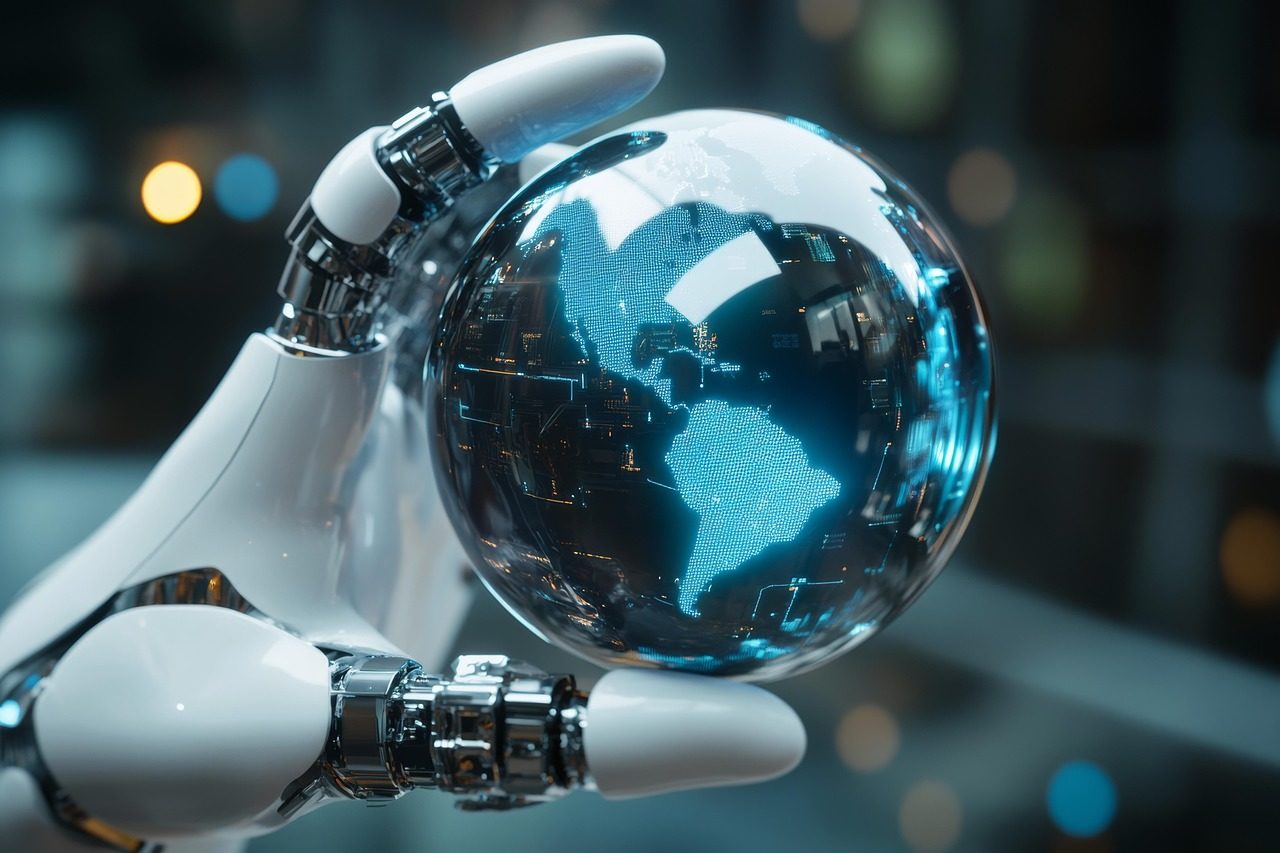
Why AI Robots Are Moving From Demos to Real Work

Beyond the Viral Video
For years, the public perception of robotics was shaped by highly polished videos of humanoid machines performing backflips or dancing to pop songs. These clips were impressive, but they rarely reflected the messy reality of industrial work. In a controlled lab, a robot can be programmed to succeed every time. On a warehouse floor or a construction site, the variables are infinite. The transition from these staged demonstrations to actual, productive labor is finally happening. This shift is not driven by a sudden breakthrough in metal or motors, but by a fundamental change in how machines process their surroundings. We are moving away from rigid programming toward systems that can learn and adapt.
The core takeaway for businesses and observers is that the value of a robot is no longer measured by its physical agility alone. Instead, the focus has shifted to the intelligence driving that agility. Companies are now looking for systems that can handle the unpredictable nature of the real world without needing a human to step in every five minutes. This change is making automation viable for tasks that were previously too complex or too expensive to automate. As we move into , the focus is on reliability and return on investment rather than social media engagement. The era of the expensive toy is ending, and the era of the autonomous worker is beginning.
Software Is Finally Catching Up to Hardware
To understand why this is happening now, we have to look at the software stack. In the past, if you wanted a robot to pick up a box, you had to write specific code for the exact coordinates of that box. If the box moved two inches to the left, the robot would fail. Modern systems use what is known as embodied AI. This approach allows the machine to use cameras and sensors to understand its environment in real time. Instead of following a fixed script, the robot uses a foundation model to decide how to move. This is similar to how large language models process text, but applied to physical motion and spatial awareness.
This software progress means that robots can now handle objects they have never seen before. They can differentiate between a glass bottle and a plastic bag, adjusting their grip strength accordingly. This level of generalization was the missing piece for decades. Hardware has been relatively mature for a long time. We have had capable robotic arms and mobile bases since the late twentieth century. However, those machines were effectively blind and mindless. They required a perfectly structured environment to function. By adding a layer of sophisticated perception and reasoning, we are removing the need for that structure. This allows robots to step out of their cages and work alongside humans in shared spaces.
The result is a more flexible form of automation. A single robot can now be trained to perform multiple tasks throughout a shift. It might spend the morning unloading a truck and the afternoon sorting packages for delivery. This flexibility is what makes the economics work for smaller companies that cannot afford a dedicated machine for every single step of their process. The software is becoming the great equalizer in the industrial sector.
The Economic Engine of Automation
The global push for robotics is not just about cool technology. It is a response to massive economic shifts. Many developed nations are facing a shrinking workforce and an aging population. There are simply not enough people to fill every role in logistics, manufacturing, and agriculture. According to data from the International Federation of Robotics, the installation of industrial robots continues to hit record highs as companies struggle to find reliable labor. This is particularly true for jobs that are repetitive, dirty, or dangerous.
We are also seeing a trend toward reshoring manufacturing. Governments want to bring production back to their own borders to avoid the supply chain disruptions that have become common. However, labor costs in the US and Europe are much higher than in traditional manufacturing hubs. Automation is the only way to make domestic production cost-competitive. By using robots to handle the most basic tasks, companies can keep their operations local while still maintaining a profit. This shift is changing the global trade environment as the advantage of cheap labor begins to fade.
- Logistics and e-commerce fulfillment centers.
- Automotive and heavy machinery assembly lines.
- Food processing and agricultural harvesting.
- Electronic component manufacturing and testing.
- Medical laboratory automation and pharmaceutical sorting.
The impact is felt most acutely in the logistics sector. The rise of online shopping has created a demand for speed that human workers struggle to meet. Robots can work through the night without breaks, ensuring that a package ordered at midnight is ready for delivery by dawn. This 24 hour cycle is becoming the new standard for global commerce. For more insights into how these trends are shaping the future, you can read about the latest robotics trends at our AI insights hub.
A Shift in the Daily Grind
Consider a typical day for a warehouse manager named Sarah. A few years ago, her morning would start with a frantic attempt to fill shifts for the loading dock. If two people called in sick, teh entire operation would slow down. Today, Sarah oversees a fleet of autonomous mobile robots that handle the heavy lifting. When a truck arrives, these machines use computer vision to identify the pallets and move them to the correct aisles. Sarah is no longer managing individual tasks. She is managing a system. Her role has shifted from manual oversight to technical coordination. She spends her time analyzing performance data and ensuring the robots are optimized for the day’s specific inventory.
This scenario is becoming common across the world. In a manufacturing plant in Germany, a robot might be responsible for welding parts with a precision that no human could match for eight hours straight. In a Japanese hospital, a robot might deliver meals and linens to patient rooms, freeing up nurses to focus on actual medical care. These are not the humanoid robots of science fiction. They are often just boxes on wheels or articulated arms bolted to the floor. They are boring, and that is exactly why they are successful. They do the work that people no longer want to do, and they do it with consistent accuracy.
However, the transition is not always smooth. Integrating these systems requires a significant upfront investment and a change in company culture. Workers often fear that they will be replaced, even if the robots are only taking over the most grueling parts of the job. Successful companies are those that invest in retraining their staff. Instead of laying off workers, they teach them how to maintain and program the new machines. This creates a more skilled workforce and a more resilient business. The real world impact is a gradual evolution of the workplace rather than a sudden displacement of the human element.
BotNews.today uses AI tools to research, write, edit, and translate content. Our team reviews and supervises the process to keep the information useful, clear, and reliable.
The reality is that robots are still quite limited in their physical capabilities. They struggle with soft or irregular objects, like a bunch of grapes or a tangled mess of wires. They also lack the common sense that humans take for granted. If a robot sees a puddle of water, it might not realize it should avoid it to prevent slipping or short-circuiting. These small gaps in capability are where the human-robot partnership is most important. We are still years away from a machine that can truly match the versatility of a human hand and brain in every environment.
The Unseen Price of Progress
As we integrate these machines into our lives, we must ask difficult questions about the hidden costs. What happens to the data that these robots collect? A robot moving through a warehouse or a home is constantly scanning its environment. It creates a detailed map of the space and records the movement of everyone around it. Who owns this data, and how is it being used? If a company uses a fleet of robots to monitor its factory, is it also inadvertently monitoring the private habits of its employees? The privacy implications are vast and largely unregulated.
There is also the question of energy and sustainability. Training the massive models that power these robots requires an enormous amount of electricity. The data centers running these computations have a significant carbon footprint. Furthermore, the robots themselves are made of rare materials that are difficult to mine and even harder to recycle. Are we trading one set of environmental problems for another? We need to consider the full lifecycle of these machines, from the minerals in their batteries to the power consumed by their processors. If a robot saves ten percent in labor costs but increases energy consumption by thirty percent, is it truly an improvement?
Have an AI story, tool, trend, or question you think we should cover? Send us your article idea — we’d love to hear it.We should also consider the social cost of a world where human interaction is minimized. If robots handle our deliveries, cook our food, and clean our streets, what does that do to the social fabric of our communities? There is a risk of increased isolation as the casual interactions of the service economy disappear. We must decide which tasks are better left to machines and which require a human touch. Efficiency is a powerful motivator, but it should not be the only metric we use to judge the success of a technology. How do we ensure that the benefits of automation are shared by everyone, rather than just the owners of the machines?
Beneath the Outer Shell
For the power users and engineers, the real story is in the implementation details. Most modern industrial robots are moving toward a standardized software framework like ROS 2 (Robot Operating System). This allows for better interoperability between different pieces of hardware. One of the biggest challenges in the field is latency. When a robot is performing a high-speed task, even a few milliseconds of delay in the processing loop can cause a failure. This is why we are seeing a shift toward edge computing. Instead of sending data to the cloud for processing, the heavy lifting is done on local hardware, often using specialized chips designed for AI inference.
Local storage is another critical factor. A robot generating high-resolution video data and sensor logs can easily produce several terabytes of data in a single shift. Managing this data without clogging the local network is a major hurdle. Engineers have to decide what data is worth keeping for training and what can be discarded. There are also strict API limits to consider when integrating robots with existing enterprise resource planning systems. A warehouse management system might not be designed to handle the thousands of status updates per second that a robotic fleet generates. This requires a middleware layer that can aggregate and filter the data before it reaches the main database.
- Inference speed for real-time obstacle avoidance.
- Battery density and thermal management for 24 hour operation.
- Sensor fusion techniques combining LiDAR, depth cameras, and IMUs.
- End-to-end encryption for all data transmitted over local Wi-Fi.
- Modular hardware design to allow for quick repairs on the floor.
The workflow integration is where most projects fail. It is one thing to get a robot to work in a lab, but it is another to make it play nice with the existing software used by a global corporation. Security is also a paramount concern. A hacked robot is not just a data risk, it is a physical safety risk. Ensuring that these machines cannot be hijacked requires a deep focus on secure boot processes and hardware-level encryption. As we move into , the focus for developers is on making these systems as robust and secure as the traditional IT infrastructure they are joining.
Editor’s note: We created this site as a multilingual AI news and guides hub for people who are not computer geeks, but still want to understand artificial intelligence, use it with more confidence, and follow the future that is already arriving.
Found an error or something that needs to be corrected? Let us know.The Next Decade of Labor
The move from demos to real work is a sign that the technology has matured enough to face the scrutiny of the market. We are no longer impressed by a robot that can walk, we want to know if it can work for ten hours without breaking. The quiet gains in warehouses and factories are far more significant than any viral video. These machines are becoming a standard part of the global industrial stack. They are solving real problems in labor and logistics, even if they are not as flashy as the ones we see in movies. The economic pressure to automate is only going to increase, and the software is finally ready to meet that demand.
The big question that remains is how quickly we can scale these systems. It is one thing to deploy ten robots in a single facility, but it is another to manage ten thousand across a global network. We are still learning how to maintain, update, and secure these machines at scale. As the hardware becomes more affordable and the software becomes more capable, the line between manual and automated labor will continue to blur. The robots are here, and they are finally ready to get to work. The next few years will determine how we live and work alongside them.