Why Laptop Makers Suddenly Want Everything to Be AI

The tech industry moves in cycles of centralization and decentralization. For the last decade, the cloud was the center of the universe. Every smart feature on your laptop relied on a server in a distant data center. This is changing rapidly. Laptop manufacturers like Intel, AMD, and Apple are now moving the intelligence back to the local device. They are doing this by adding a specific piece of silicon called a Neural Processing Unit to every new machine. This shift is not just about speed. It is about power efficiency and privacy. When your computer can process complex patterns without talking to the internet, it becomes more capable and less dependent on a subscription. The industry calls this the AI PC era. It is the most significant change to the internal architecture of a laptop since the introduction of the multi-core processor. This transition aims to turn the laptop from a passive tool into an active assistant that understands context without draining the battery in two hours.
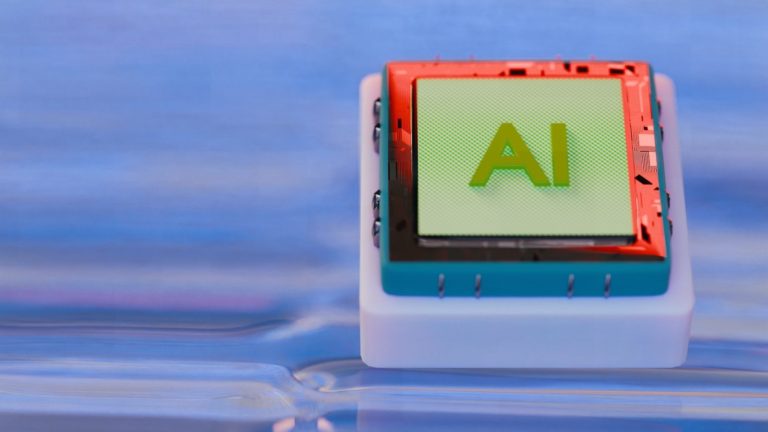
To understand why this is happening, you must look at the hardware. A standard laptop has a Central Processing Unit for general tasks and a Graphics Processing Unit for visual data. Neither is perfect for artificial intelligence. A CPU is too slow for the massive math required by modern models. A GPU is fast but consumes a huge amount of electricity. The **Neural Processing Unit** is a specialized chip designed to handle the specific math used in machine learning. It uses very little power to perform trillions of operations per second. This allows a laptop to run a large language model or an image generator locally. By offloading these tasks to the NPU, the CPU and GPU are free to handle their normal work. This architecture prevents the laptop from overheating when you use smart features. It also means that features like eye contact correction in video calls can run constantly in the background without you noticing a performance hit. Manufacturers are betting that this efficiency will convince users to upgrade their aging hardware.
The push for local hardware is also a response to the rising costs of cloud computing. Every time you ask a cloud-based AI to summarize a document, it costs the provider money in electricity and server maintenance. By moving that work to your laptop, companies like Microsoft and Google save billions in infrastructure costs. This shift effectively moves the bill for AI compute from the software provider to the consumer who buys the hardware. It is a clever move that aligns with the business goals of silicon giants like Intel and AMD. They need a new reason for people to buy computers every three years. The AI PC provides that reason by promising features that simply will not run well on older machines. You can find more details on these shifts in our comprehensive AI hardware guides which track the evolution of consumer silicon. This is not just a trend for high-end workstations. It is becoming the baseline for every consumer laptop sold globally.
The global impact of this transition is centered on data sovereignty and energy. Governments and large corporations are increasingly worried about where their data goes. If a bank in Germany uses a cloud AI to analyze sensitive financial records, that data might leave the country. Local AI solves this problem by keeping the data on the laptop. This satisfies strict privacy laws like GDPR in Europe and similar regulations in Asia. It also reduces the global energy footprint of the internet. Data centers consume a staggering amount of power to move and process information. If a significant portion of that work happens on the millions of laptops already sitting on desks, the strain on the global grid is reduced. This decentralized approach is more resilient. It allows a worker in a region with poor internet connectivity to use advanced tools that were previously only available to those with high-speed fiber optics. This democratization of compute power is a major driver for the international tech market.
In a typical workday, the impact of an AI-native laptop is subtle but constant. Imagine starting your morning with a video conference. In the past, blurring your background or removing noise would make your laptop fans spin loudly. With an NPU, these tasks happen silently and use almost no battery. During the meeting, a local model transcribes the conversation and identifies action items in real time. You do not need to upload the audio to a server, which protects the company secrets discussed in the room. Later, you need to find a specific spreadsheet from last year. Instead of searching for a file name, you ask the computer to find the document where you discussed the budget for the Tokyo office. The laptop scans its local index of your files and finds it instantly. This is the difference between a search engine and a local intelligence engine. It understands the content of your work rather than just the labels you give it.
By the afternoon, you might need to generate an image for a presentation. Instead of waiting for a queue on a website, you use a local version of Stable Diffusion. The image appears in seconds because the NPU is optimized for this exact task. You might also recieve a long report that you do not have time to read. You drag it into a local window and get a three-paragraph summary immediately. This workflow is faster because there is no network latency involved. You are not waiting for a signal to travel across the ocean and back. The computer feels more responsive because the processing is happening inches away from your fingers. This is the practical reality of the AI PC. It is not about one big feature that changes everything. It is about a hundred small improvements that make the machine feel more intuitive. The goal is to remove the friction between your thoughts and the digital output.
BotNews.today uses AI tools to research, write, edit, and translate content. Our team reviews and supervises the process to keep the information useful, clear, and reliable.
Socratic skepticism is necessary when evaluating these claims. We must ask if the NPU is actually a useful tool or just a way to justify higher price tags. Most current AI features are software tricks that could technically run on older hardware, albeit more slowly. Is the industry creating a synthetic need for new silicon? There is also the question of longevity. AI models are growing in size and complexity every month. A laptop bought today might have an NPU capable of 40 trillion operations per second, but will that be enough for the models of ? We might be entering an era where hardware becomes obsolete much faster than it did in the previous decade. If the core functionality of your operating system depends on a specific chip, you lose the ability to keep using your computer for ten years. This creates a massive amount of electronic waste. We must also consider the privacy trade-off. An AI that indexes everything you do to be helpful is also an AI that has a perfect record of your entire life. Who controls that index and can it be subpoenaed?
The technical layer of this transition is where the real constraints appear. For an NPU to be useful, software developers must write code that can talk to it. This requires standardized APIs like Windows DirectML or Intel OpenVINO. Right now, the ecosystem is fragmented. A feature that runs on an Apple Mac might not work on a Windows laptop with an AMD chip. There is also the issue of memory bandwidth. AI models require huge amounts of data to be moved quickly between the memory and the processor. Most current laptops have a bottleneck here. Even if the NPU is fast, it might spend most of its time waiting for the RAM to deliver data. This is why we are seeing a move toward unified memory architectures where the CPU, GPU, and NPU all share the same high-speed pool of data. This improves performance but makes the laptops impossible to upgrade after purchase. You cannot just add more RAM later because the memory is soldered right next to the processor for maximum speed.
Power users should look closely at the specifications before buying into the hype. The industry uses a metric called TOPS to measure AI performance. However, TOPS is a raw number that does not account for how the chip handles different types of data, such as INT8 or FP16 precision. A chip with high TOPS might still struggle with specific models if its architecture is not optimized for them. There are also thermal limits to consider. A thin and light laptop might have a powerful NPU, but if it cannot dissipate the heat, the system will throttle the speed after a few minutes of heavy use. Local storage is another factor. Running large models locally requires gigabytes of space for the model weights alone. If you buy a laptop with a small hard drive, you will quickly find yourself out of room. The geek section of the market is currently a graveyard of early-adopter hardware that promised much but lacked the software support to deliver. We are still waiting for a universal standard that makes AI software truly portable across all hardware brands.
Have an AI story, tool, trend, or question you think we should cover? Send us your article idea — we’d love to hear it.The bottom line is that the AI PC is a real architectural shift, but it is currently in its infancy. For most people, the benefits today are limited to better video calls and slightly faster photo editing. The real value will appear over the next two years as operating systems integrate local inference into every corner of the user interface. You should not rush to replace a working laptop just to get an NPU sticker. However, when you do eventually upgrade, the presence of a dedicated AI chip will be mandatory for a good experience. The industry is moving away from the cloud for everyday tasks. This will lead to laptops that are more private, more efficient, and more capable of handling complex work without an internet connection. It is a return to the idea of the personal computer as a self-contained powerhouse. The marketing might be loud, but the underlying technology is a necessary step for the next decade of computing.
Editor’s note: We created this site as a multilingual AI news and guides hub for people who are not computer geeks, but still want to understand artificial intelligence, use it with more confidence, and follow the future that is already arriving.
Found an error or something that needs to be corrected? Let us know.