The Most Important Differences Between Today’s Top Models

Stop looking at the leaderboards. If you are trying to decide which artificial intelligence model to use for your business or personal projects, the benchmarks are often the least helpful piece of information. A model that scores a few percentage points higher on a math test might be terrible at capturing the specific tone of your brand or managing a complex codebase. The industry has moved past the era where one single company held a clear lead in every category. Today, the choice is about trade-offs. You are choosing between speed, cost, memory, and the specific way a model “thinks” about a problem. The right choice for a developer in San Francisco is rarely the same as the right choice for a creative agency in London or a logistics firm in Singapore. This guide moves beyond the hype to look at the practical stakes of the current market.
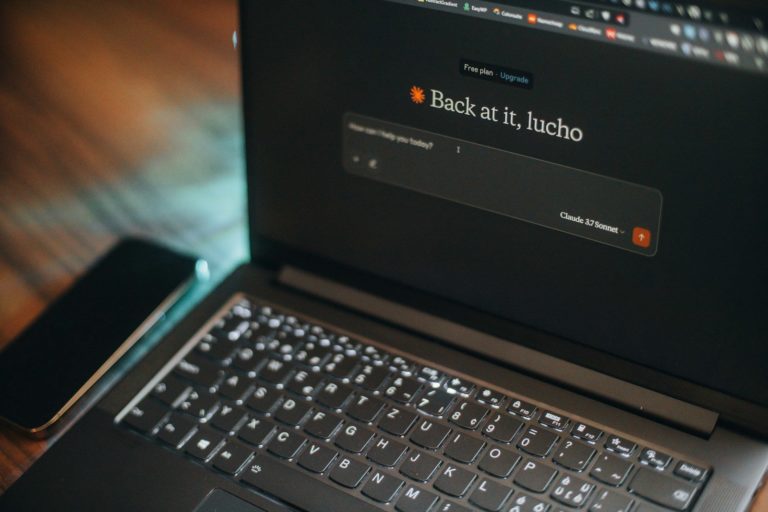
The current market is dominated by four major players that each offer a distinct flavor of intelligence. OpenAI remains the most visible with GPT-4o, a model designed to be a multimodal assistant that can see, hear, and speak in real time. It is the generalist of the group, built to handle almost any task with a high floor of quality. Anthropic has taken a different path with Claude 3.5 Sonnet, focusing heavily on nuance, coding ability, and a more human writing style that avoids the robotic “as an AI language model” tropes. Google offers Gemini 1.5 Pro, which stands out for its massive context window that allows it to process hours of video or thousands of lines of code in one go. Finally, Meta provides Llama 3, the heavyweight of the open weight world, allowing companies to run powerful systems on their own hardware without sending data to a third party server. Each of these models has a specific personality that becomes clear only after hours of use. You can find more details in our comprehensive AI reviews to see how these compare in specific benchmarks.
Choosing between these four requires understanding their core strengths. GPT-4o is excellent for mobile users and those who need a reliable “Swiss Army knife” for daily tasks. Claude 3.5 Sonnet has quickly become the favorite for software engineers because of its ability to follow complex instructions without getting lost. Gemini 1.5 Pro is the tool for researchers who need to analyze massive datasets or long documents that would choke other models. Llama 3 is the choice for those who prioritize privacy and want to avoid the recurring costs of API subscriptions. These models are not just different in their outputs, they are different in their fundamental architecture and the data they were trained on. This leads to a variety of behaviors in how they handle logic, creativity, and safety constraints.
- GPT-4o: Best for voice interaction and general purpose tasks.
- Claude 3.5 Sonnet: Best for coding, creative writing, and nuanced reasoning.
- Gemini 1.5 Pro: Best for long context tasks like analyzing books or long videos.
- Llama 3: Best for local deployment and data sovereignty.
The impact of these models is not felt equally across the globe. While the headquarters of these companies are mostly in the United States, their users are everywhere. This creates a friction point regarding language and cultural nuance. Most models are trained on a massive amount of English language data, which can lead to a Western bias in their suggestions and worldviews. For a company in Japan or Brazil, the “best” model is often the one that handles their native language with the most natural flow, not the one that won a logic puzzle in a California lab. High latency can also be a major barrier in regions with slower internet infrastructure, making smaller and faster models more attractive than the massive flagship versions.
Cost is another global factor that is often overlooked. The price of an API call might seem small in US dollars, but for a startup in an emerging economy, those costs add up quickly. This is where the open weight models like Llama 3 are making a massive difference. By allowing local hosting, they remove the need for expensive international payments and provide a level of stability that cloud based models cannot match. Governments are also taking notice, with some nations pushing for “sovereign AI” to ensure their data and cultural heritage are not controlled by a handful of foreign corporations. The choice of a model is becoming a political and economic decision as much as a technical one. We are seeing a shift where the ability to run a model locally is seen as a matter of national security in some parts of the world.
To understand how this looks in practice, consider a day in teh life of a modern creative professional. In the morning, they might use GPT-4o on their phone to transcribe a meeting and summarize the action items while they are commuting. The voice interface is smooth and the summary is accurate enough to share with the team immediately. By noon, they are back at their desk working on a new web application. They switch to Claude 3.5 Sonnet because it understands the latest React libraries better than its competitors. It writes clean code that requires fewer corrections, saving the developer hours of debugging. The model feels more like a partner than a tool. Later in the afternoon, they need to research a 500 page regulatory document to see how it affects their project. They drop the entire PDF into Gemini 1.5 Pro, which can scan the whole thing in seconds and find the three sentences that actually matter.
BotNews.today uses AI tools to research, write, edit, and translate content. Our team reviews and supervises the process to keep the information useful, clear, and reliable.
This reality contradicts the marketing promise of an “all in one” AI assistant. In the real world, users are forced to juggle multiple subscriptions and interfaces to get their work done. A marketing manager might use one model for brainstorming headlines because it is more “creative” and another for analyzing customer data because it is more “logical.” This fragmentation creates a high cognitive load. You have to remember which model has which files and which one is better at specific tasks. For many users, the *reliability* of the output is the most important factor. If a model hallucinates a fact in a legal brief, the time saved in writing is lost in the time spent fact checking. The stakes are high for companies that are integrating these tools into their customer service bots or internal knowledge bases. One wrong answer can lead to a PR disaster or a lost client. This is why many are choosing to use multiple models in a “voting” system where they compare the outputs of two or three different systems before showing the result to a human.
We must ask difficult questions about the hidden costs of this technology. Who is actually paying for the massive amount of electricity and water required to keep these data centers running? While the user pays a few cents per query, the environmental cost is being externalized. There is also the question of data ownership. When you upload your company’s private strategy document to a cloud based model, do you really know where that data goes? Most providers claim they do not train on enterprise data, but the history of the tech industry suggests that “opt out” policies are often buried in complex terms of service. What happens if a provider decides to change their pricing or shut down an API that your entire workflow depends on? The dependency we are building on these few companies is a risk that many are not fully calculating. Is it wise to let a single algorithm determine how your employees write, code, and think? These are not just technical problems, they are questions of corporate autonomy and ethics that will remain unresolved for years to come.
Have an AI story, tool, trend, or question you think we should cover? Send us your article idea — we’d love to hear it.For the power users and developers, the choice often comes down to the technical plumbing. API limits are a constant source of frustration. OpenAI and Anthropic have strict rate limits that can throttle a growing application without warning. Google’s Gemini offers a more generous approach for now, but that could change as they look to monetize their massive infrastructure. Then there is the issue of local storage. If you are building an app that needs to work offline or in a high security environment, you are limited to models like Llama 3 or Mistral that can be run on a local server. This requires significant investment in hardware, specifically high end GPUs from companies like NVIDIA. The trade-off is between the ease of a cloud API and the control of a local setup. Most power users are finding that a hybrid approach is best, using the cloud for heavy lifting and local models for sensitive or repetitive tasks that do not require the highest level of reasoning.
Workflow integration is the next big hurdle. It is one thing to chat with a model in a browser, but it is another to have that model live inside your code editor or your project management tool. The “ecosystem fit” is becoming the primary driver of choice. If your company is already deep in the Google Workspace, Gemini is the natural choice because it can see your emails and calendar. If you are a developer using GitHub, the integration with Copilot makes GPT-4o the default. We are seeing the “walled gardens” of the past being rebuilt around AI models. This makes it harder for smaller, perhaps better, models to gain a foothold because they lack the distribution of the tech giants. The technical specs of show that while the models are getting smarter, the real battle is over who controls the interface where the work actually happens.
The bottom line is that there is no “best” model, only the best model for your specific constraints. If you need a creative writing partner that feels human, choose Claude. If you need a mobile assistant that can see the world through your camera, choose GPT-4o. If you are dealing with massive documents that require a huge memory, Gemini is the only real option. And if you are a developer who needs to keep data on your own machines, Llama 3 is your primary candidate. The confusion you feel is a result of a market that is moving faster than our ability to categorize it. Stop chasing the highest benchmark and start testing these tools against your actual daily problems. The differences in price, speed, and style are real, and they will only become more pronounced as these companies stop trying to do everything and start focusing on what they do best.
Editor’s note: We created this site as a multilingual AI news and guides hub for people who are not computer geeks, but still want to understand artificial intelligence, use it with more confidence, and follow the future that is already arriving.
Found an error or something that needs to be corrected? Let us know.