China vs America in AI: Who Is Ahead in 2026?

A Tale of Two Tech Titans in
Welcome to the most exciting race on the planet. If you have been following the news lately, you probably know that the world of artificial intelligence is moving faster than a rocket ship. It feels like every single morning we wake up to a new announcement that makes our jaws drop. Right now, two giant players are leading the way in this friendly competition to build the future. We are talking about the United States and China. Both of these places are doing incredible things, but they are doing them in very different ways. It is not really about one being better than the other in every category. Instead, it is about how their different strengths are helping all of us live better lives. Whether you are using a smart assistant to organize your day or a business is using data to find better ways to serve you, these two powerhouses are the ones making it happen. By the time we get through this chat, you will see exactly why this competition is the best thing that could happen for tech fans everywhere.
The core takeaway for is that while the US holds a lead in raw computing power and massive creative platforms, China is catching up fast by using AI in the real world at a scale we have never seen before. It is a classic case of different styles meeting on the same track. One side is building the most powerful engines, while the other is building the most efficient roads. This means that no matter where you live, you are going to see the benefits of these two different approaches. We are moving away from the old idea that only one country can win. In this new era, the wins are shared because the software and ideas flow across borders faster than ever. It is a great time to be a curious observer because the tools we get to play with are becoming more helpful, more fun, and more accessible every single day.
Found an error or something that needs to be corrected? Let us know.Two Different Ways to Build a Brain
To understand what is happening, imagine you are trying to build a giant library that can answer any question. The American way of doing this is like having a huge group of independent scientists and creative thinkers. They have access to the best tools and the most money. They love to try wild new ideas and see what sticks. This is why we see so many famous platforms coming out of places like Silicon Valley. They have a massive advantage in what we call capital depth. This just means they have a lot of money to throw at big, risky ideas. They also have a huge lead in cloud control. This is the ability to run massive programs on giant groups of computers that live in warehouses. Because they have the best chips and the most advanced hardware, they can build models that feel like they have a spark of human magic in them. They focus on making tools that can do almost anything, from writing a poem to coding a website from scratch.
On the other side of the world, the Chinese approach is more like a perfectly synchronized orchestra. There is a very strong sense of state alignment where the government and the big tech companies work together on a specific plan. While they might face some hurdles when it comes to getting the very latest chips from overseas, they are experts at making the most of what they have. They have something that no one else has, and that is domestic scale. With over a billion people using mobile apps for everything from buying groceries to paying their taxes, they have a mountain of data to learn from. This allows them to build AI that is incredibly good at specific tasks. They are not just making a general assistant. They are making AI that can manage an entire city or help a factory run without a single mistake. They are the masters of taking an idea and making it work for millions of people all at once.
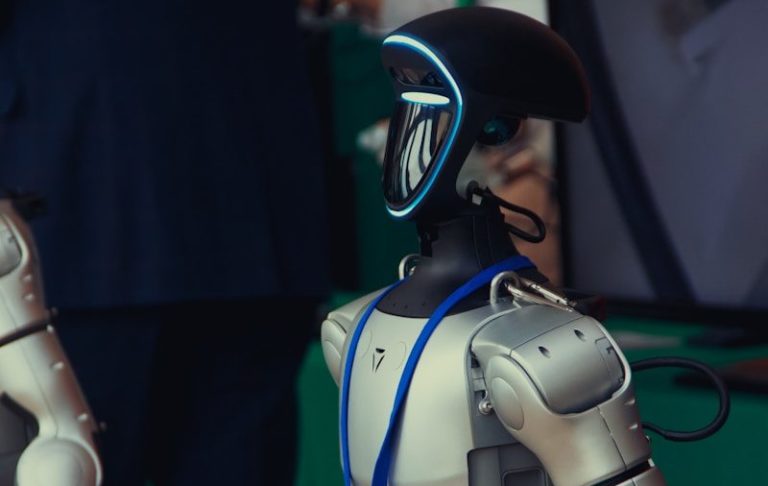
One of the biggest misunderstandings people have is that China is just copying what the US does. That is a very old way of thinking and it is simply not true anymore. While they do look at open models that are shared by American companies, they are adding their own special sauce. They are focusing on how to make AI work on smaller devices and how to make it super efficient. They are also leading the way in how AI interacts with physical things, like robots and smart cars. In the US, the focus is often on the software and the big creative ideas. In China, the focus is often on the hardware and the practical application. When you put these two together, you get a world where the software gets smarter and the machines get more capable at the same time. It is a beautiful partnership of ideas, even if they are competing for the top spot on the leaderboard.
Why the Whole World Wins
You might wonder why a person living in Europe, South America, or Africa should care about this race. The truth is that this competition is driving down the cost of tech for everyone. When two giants compete, they try to outdo each other by making their tools faster, better, and cheaper. This is great news for the average person. We are seeing a massive wave of open models being shared with the world. This means that a student in a small town can now access teh same level of AI power that a big company had just a few years ago. The US is leading the way in sharing these open models, which allows developers everywhere to build their own apps. Meanwhile, China is showing the world how to use AI to solve big problems like traffic jams and energy use. This gives every country a menu of options to choose from depending on what they need.
The global impact is also about how we talk to each other. AI is breaking down language barriers faster than we ever thought possible. Because of the push to win users all over the globe, companies are making sure their AI can speak dozens of languages perfectly. This opens up new opportunities for trade and friendship. It also means that the best ideas can come from anywhere. If a developer in Brazil finds a way to make an AI model run faster, they can share that with the world. According to reports from the Stanford Institute for Human-Centered AI, the amount of collaboration in the research world is still very high. Even when there are political tensions, the scientists are often still reading each other’s papers and learning from each other. This shared knowledge is what keeps the engine of progress moving forward for all of us.
Another reason this is great news is the variety of choices we now have. If you want a tool that is highly creative and can help you write a novel, you might choose an American model. If you want a tool that is incredibly efficient at recognizing patterns or managing a complex supply chain, you might look at what is coming out of the Chinese tech hubs. This variety prevents a monopoly where only one way of thinking dominates the tech world. It keeps things fresh and forces everyone to keep improving. We are also seeing a big focus on making AI more helpful for regular people who are not tech experts. The goal is to make these tools as easy to use as a toaster or a smartphone. As the CNBC Tech section often highlights, the real winners are the consumers who get to enjoy better products every year.
A Day in the Life of Global AI
Let us look at how this actually looks in the real world for two different people. Imagine Sarah and Wei as they go about their Tuesday. Sarah lives in a cozy apartment in Austin, Texas. She starts her morning by asking her AI assistant to summarize all the emails she got overnight. The AI, built by an American company, uses its massive creative power to write a funny little poem that tells her she has three meetings and a lunch date. Later, Sarah uses a design tool to create a logo for her new side business. She just types in a few words, and the AI gives her fifty beautiful options. This is the power of the creative, platform-driven AI that the US excels at. It helps Sarah be an artist and an entrepreneur without needing a huge team of people to help her.
Now let us look at Wei in Hangzhou. Wei does not interact with a talking assistant as much, but AI is everywhere in his life. When he leaves his apartment, the traffic lights are managed by an AI system that knows exactly how many cars are on the road, so he never hits a red light. He goes to a small convenience store and pays just by looking at a camera. The AI recognizes him and handles the payment in less than a second. At his job in a large warehouse, he works alongside robots that use AI to sort thousands of packages with perfect accuracy. This is the domestic scale and practical application that China does better than anyone else. For Wei, AI is a silent helper that makes the city move like a well-oiled machine. Both Sarah and Wei are having a better day because of AI, but in totally different ways.
These stories show us that the competition is not just about who has the fastest computer. It is about how we use that power to make life better. In the US, the focus is often on the individual and their creativity. In China, the focus is often on the community and the efficiency of the system. Neither one is the only right way to do it. In fact, we need both. We need the creative tools to invent new things, and we need the efficient systems to make sure those inventions can reach everyone. You can find more stories about these amazing real-world uses by checking out the latest AI developments on our site. It is truly wonderful to see how these different philosophies are coming together to build a world that is more connected and more helpful for everyone, no matter where they live.
Thinking About the Fine Print
As we enjoy all these new toys, it is natural to have a few questions about the hidden parts of the tech world. We often wonder about who owns our data and how much it costs the planet to run these massive computer centers. There are also conversations about how much energy it takes to train a big model and whether we are being careful enough with our privacy. These are not reasons to be sad or scared, but rather interesting puzzles for us to solve together. Both the US and China are looking at these issues in their own ways. Some are focusing on making chips that use less power, while others are writing new rules to make sure our personal information stays safe. It is a bit like learning to drive a very fast car. We are all excited about where we are going, but we are also making sure the seatbelts work and the brakes are strong. This curious and careful approach is exactly what will help us keep the tech world safe and fun for a long time.
Have a question, suggestion, or article idea? Contact us.Deep Dives for the Real Tech Fans
Now for my friends who love to get into the nitty gritty details, let us talk about the geeky side of things. One of the biggest topics right now is workflow integration. It is one thing to have a smart AI, but it is another thing to make it work inside the apps we already use every day. American companies are winning here by opening up their APIs so that any developer can plug AI into their own software. This creates a massive web of connected tools. However, they do have to deal with API limits and the high cost of running these models in the cloud. This is why we are seeing a big push for local storage and edge computing. People want to run AI directly on their phones or laptops without needing to send data to a giant server far away. This is an area where Chinese companies are doing a lot of work because they are very good at making software that runs on many different kinds of hardware.
We also have to look at the hardware side, specifically the chips. You might have heard about the H100 or other high-end processors. These are the engines that make AI possible. While the US has a lead in designing these chips, the whole world is trying to find ways to do more with less. Some developers are finding that they do not always need the biggest, most expensive model. Sometimes, a smaller model that is tuned for a specific task is actually better and much cheaper. I beleive we are going to see a huge trend of local models that live on your own device. This is great for privacy and speed. Imagine having a personal assistant that knows everything about your work but never sends a single byte of data to the internet. That is the future of power user specs. It is about giving the user more control over their own tech.
Have an AI story, tool, trend, or question you think we should cover? Send us your article idea — we’d love to hear it.Another interesting thing to watch is how policy is trying to keep up with the speed of the industry. In the US, things move very fast and the rules are often written after the tech is already out in the world. In China, the rules are often part of the plan from the very beginning. This creates two different environments for developers. One offers a lot of freedom to experiment, while the other offers a very clear path of what is allowed. Outsiders often oversimplify this by saying one is better than the other, but the truth is that both have pros and cons. If you are a developer with a small budget, you might prefer the open models from the US. If you are building a massive industrial system, you might prefer the structured support found in the Chinese tech ecosystem. There is a tool for every task and a budget for every user. The key is to know what you need and where to find the best version of it. For more in-depth research, you can always visit the MIT Technology Review to see the latest data on chip performance and model efficiency.
BotNews.today uses AI tools to research, write, edit, and translate content. Our team reviews and supervises the process to keep the information useful, clear, and reliable.
Editor’s note: We created this site as a multilingual AI news and guides hub for people who are not computer geeks, but still want to understand artificial intelligence, use it with more confidence, and follow the future that is already arriving.
The tech world is also looking at how to make these systems more reliable. We are seeing a lot of work on local storage solutions that allow a 500 m2 data center to do the work that used to require much more space. This efficiency is what allows AI to move from giant labs into our pockets. Even with chip constraints, the cleverness of engineers is finding ways to bypass the bottlenecks. They are using new techniques to train models faster and with less data. This is a structural shift in how we think about computing. It is no longer just about raw power. It is about smart design. Whether it is through cloud control or local optimization, the goal is the same. We want tech that is fast, reliable, and easy to integrate into our busy lives. The contradictions in the two systems are what make the whole field so vibrant and full of life.
The Bright Path Ahead
At the end of the day, the competition between China and the US in the field of artificial intelligence is a win for everyone. We are seeing a massive explosion of creativity and efficiency that is making the world a more interesting place. Instead of worrying about who is in first place, we can celebrate the fact that we have so many amazing tools at our fingertips. The US continues to lead in big, creative platforms and massive cloud power, while China leads in real-world application and massive scale. Together, they are pushing the boundaries of what is possible. The future is not about a single winner. It is about a global community of thinkers, builders, and users who are all working to make tomorrow a little bit brighter than today. Keep your eyes on the horizon, because the best is yet to come!