The Chip War Behind the AI Boom

The Silicon Bottleneck Shaping Modern Power
The global obsession with generative models often ignores the physical reality that makes them possible. Artificial intelligence is not a nebulous cloud of logic but a massive consumer of physical resources. The current boom relies on a fragile and highly concentrated supply chain of high-end semiconductors. Without these chips, the most sophisticated algorithms are useless. We are seeing a shift where compute capacity is becoming the primary metric for corporate and national success. This has created a high-stakes environment where access to hardware determines who can build and who must wait. The bottleneck is not just about the number of chips produced but the specific ability to manufacture components that can handle billions of parameters simultaneously. As we move through , the struggle to secure this hardware has moved from the backrooms of IT departments to the highest levels of government policy. The stakes involve more than just faster chatbots. They involve the fundamental control of the next era of industrial productivity. If you do not own the silicon, you do not own the future of the industry.
More Than Just a Processor
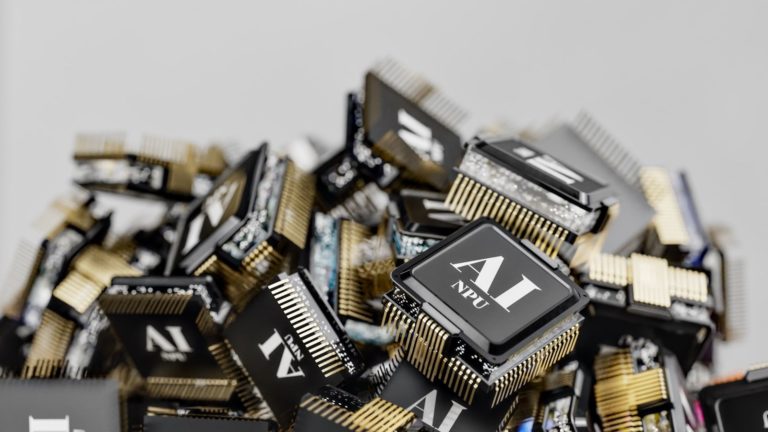
When people talk about the chip war, they often focus on the design of the Graphics Processing Unit. While the design is critical, it is only one part of a complex assembly. A modern AI chip is a marvel of integration that includes high bandwidth memory and advanced packaging techniques. High bandwidth memory allows data to move between the processor and the storage at speeds that were unthinkable a decade ago. Without this specific type of memory, the processor would sit idle while waiting for information to arrive. This creates a secondary market where companies like SK Hynix and Samsung are just as vital as the chip designers themselves. Another critical factor is the packaging process known as Chip on Wafer on Substrate. This method allows different types of chips to be stacked and connected in a single unit. It is a highly specialized process that very few companies can perform at scale. This concentration of manufacturing capability means that a single factory failure or a trade restriction can halt global progress. The industry is currently struggling to expand this packaging capacity, which remains a tighter bottleneck than the actual printing of the silicon wafers. Understanding this helps explain why simply building more factories is not a quick fix for the shortage. The process involves a global dance of materials and expertise that cannot be easily replicated in a new location.
BotNews.today uses AI tools to research, write, edit, and translate content. Our team reviews and supervises the process to keep the information useful, clear, and reliable.
The hardware stack for AI includes several distinct layers that must work in perfect unison:
- Logic layers that perform the actual mathematical calculations for neural networks.
- Memory layers that provide the massive throughput required for training models.
- Interconnects that allow thousands of chips to talk to each other in a data center.
- Cooling systems and power delivery components that keep the hardware from melting.
The New Geopolitical Currency
The concentration of chip manufacturing has turned hardware into a tool of foreign policy. Most of the worlds most advanced logic chips are produced by a single company in Taiwan. This creates a strategic vulnerability that governments are now rushing to address through massive subsidies and export controls. The United States and its allies have implemented strict rules to prevent the export of high-end AI chips and the machinery needed to make them to certain regions. These controls are designed to maintain a technological edge by limiting the compute power available to competitors. However, these restrictions also disrupt the globalized nature of the tech industry. Companies that used to rely on a seamless global supply chain now have to manage a fragmented system of licenses and restricted zones. This fragmentation increases costs and slows down the deployment of new technologies. It also forces countries under restriction to invest heavily in their own domestic capabilities, potentially creating a parallel tech ecosystem that does not rely on Western standards. The impact is felt by every company that uses cloud services, as the cost of hardware is passed down to the end user. We are no longer in an era of open technological exchange. Instead, we are seeing the rise of silicon nationalism where the goal is to secure a domestic supply of the most advanced nodes. This shift changes how companies plan their long-term infrastructure and where they choose to locate their data centers. The geopolitical tension ensures that the chip market will remain volatile for the foreseeable future.
From Boardrooms to Data Centers
For a Chief Technology Officer at a mid-sized firm, the chip war is not an abstract political issue. It is a daily logistical struggle. Imagine a scenario where a company decides to build a proprietary model to handle its internal data. The team spends months designing the architecture and cleaning the datasets. When they are ready to start training, they realize the lead time for the necessary hardware is over fifty weeks. They cannot simply use standard cloud instances because the demand has pushed prices to a point that erodes their entire budget. They are forced to compromise on the size of the model or wait a year to begin. This delay allows larger competitors with direct hardware contracts to move first. Even when the chips arrive, the challenges continue. The server racks hum as teh cooling systems kick into high gear, consuming more electricity than the rest of the office combined. The procurement officer spends their days tracking shipping containers and negotiating with vendors for specialized networking cables that are also in short supply. People tend to overestimate the importance of the software code while underestimating the difficulty of the physical deployment. A single missing networking switch can render a ten million dollar cluster of GPUs useless. This is the reality of the hardware-first era. It is a world of physical constraints where success is measured in megawatts and rack units. The day-to-day operations of an AI company are now as much about industrial engineering as they are about computer science. Creators who thought they could build the next big thing from a laptop are finding that they are tethered to the availability of massive, power-hungry infrastructure that they do not control.
The reliance on specific hardware also creates a software lock-in effect. Most AI developers use tools that are optimized for a specific brand of hardware. Switching to a different chip provider would require rewriting thousands of lines of code and retraining the team. This makes the hardware choice a decade-long commitment. Companies are finding that their hardware-first decisions today will dictate their software capabilities for years to come. This creates a sense of urgency that often leads to over-purchasing and hoarding of chips, further straining the global supply. The result is a market where the wealthiest players can outbid everyone else, creating a massive divide in the tech industry. Small startups are finding it increasingly difficult to compete without significant venture capital specifically earmarked for hardware costs. This environment favors established giants who have the capital to build their own data centers and the political weight to secure their supply chains.
The Uncomfortable Questions of Growth
As we push for more powerful hardware, we must ask what the hidden costs truly are. The energy consumption of these massive chip clusters is reaching a point where it challenges the stability of local power grids. Is it sustainable to build an economy on a technology that requires an exponential increase in electricity and water for cooling? We also need to consider the privacy implications of hardware concentration. When a handful of companies control the silicon on which all AI runs, they have unprecedented visibility into the global flow of information. What happens if these companies are pressured by governments to build backdoors into the hardware itself? The physical layer is much harder to audit than software code. Furthermore, we must look at the environmental impact of the mining and manufacturing processes required for these chips. The extraction of rare earth minerals and the high-purity water needed for fabrication plants have a significant ecological footprint. Are we trading long-term environmental health for short-term gains in processing speed? There is also the question of the edge versus the cloud. As hardware becomes more powerful, will we see a shift back to local processing to avoid the costs and privacy risks of the cloud? Or will the sheer scale required for modern models ensure that compute remains a centralized utility? These are the questions that the industry often ignores in the rush to release the next model. The focus on performance often blinds us to the systemic risks of a hardware-dependent future.
The Architecture of Performance
For the power users and engineers, the chip war is won in the details of the architecture. It is not just about raw teraflops anymore. It is about the interconnect speed and the memory bandwidth. When you are running a distributed training job across thousands of units, the bottleneck is often the networking hardware that links them. Technologies like InfiniBand and specialized Ethernet protocols have become as important as the chips themselves. If the interconnect is slow, the processors spend most of their time waiting for data from their neighbors. This is why companies are now designing their own custom networking silicon to bypass standard limitations. Another critical area is the software abstraction layer. Most developers interact with the hardware through a specific API that optimizes how the code runs on the silicon. These libraries are incredibly complex and represent a massive moat for the market leaders. Even if a competitor builds a faster chip, they must also provide a software ecosystem that is just as easy to use. We are also seeing a rise in local storage requirements. Large models require massive amounts of fast storage to feed the processors during training and inference. This has led to a surge in demand for NVMe drives and specialized storage controllers. The geek section of the market is currently focused on these three areas:
Have an AI story, tool, trend, or question you think we should cover? Send us your article idea — we’d love to hear it.- Optimizing the ratio of memory to compute to reduce energy waste.
- Developing new compression techniques to fit larger models on consumer-grade hardware.
- Building open-source alternatives to proprietary hardware APIs to break the vendor lock-in.
Local storage and local inference are becoming more popular as API limits and costs for cloud services rise. A power user now looks for hardware that can run a quantized version of a model locally, avoiding the latency and privacy issues of the cloud. This has led to a new interest in workstations with multiple high-end consumer GPUs and massive amounts of system RAM. The goal is to create a workflow that is independent of the major cloud providers. However, the hardware manufacturers often limit the features of consumer chips to prevent them from being used in data centers. This creates a constant cat and mouse game between enthusiasts and manufacturers. The ability to run these models locally is the ultimate form of digital sovereignty in a world where compute is being centralized.
The Lasting Impact
The chip war is not a temporary phase of the AI boom. It is the new foundation of the global economy. The transition from a software-centric world to one defined by hardware constraints is permanent. Companies and nations that fail to secure their place in the silicon supply chain will find themselves at a permanent disadvantage. While we may see improvements in manufacturing capacity, the demand for compute will likely continue to outpace supply for years. The open question remains whether we can find a way to make this technology more efficient or if we are destined for a future of ever-increasing resource consumption. As the physical and digital worlds become more tightly integrated, the control of the hardware layer will be the ultimate source of power. The battle for silicon is just beginning, and its outcome will define the next century of human progress.
Editor’s note: We created this site as a multilingual AI news and guides hub for people who are not computer geeks, but still want to understand artificial intelligence, use it with more confidence, and follow the future that is already arriving.
Found an error or something that needs to be corrected? Let us know.